Dynamics and prospects for the world economy
- By Heiko Khoo and Michael Roberts
 0 Comment(s)
 Print
Print E-mail China.org.cn, January 4, 2020


The decade just ending was the longest period without a slump in the major economies since 1945, but it also involved the weakest recovery. In 2019, global growth was at its slowest since the global financial crisis of 2008. What factors led to the slowdown and what enabled the major capitalist economies to avoid a major slump?
The slow annual GDP growth of 1-2% is due to low investment rates. As a recent IMF report notes, "firms turned cautious on long-range spending and global purchases of machinery and equipment decelerated."
Trade conflicts were also an important factor in the slowdown in technology spending. Global trade -- in durable final goods and components -- simply slowed to a standstill.
Since 2009, globalization and free trade increasingly has given way to protectionist measures, as in the 1930s. Governments worldwide introduced 2,723 new trade distortions, affecting an estimated 40% of world trade by November 2019.
Emerging economies suffered most. In most cases, growth has been far lower in the last six years than in the same period before the Great Recession in the 1930's. In Argentina, Brazil, Russia, South Africa and Ukraine, for example, there has been no growth at all.
In 2018, many central banks placed a hold on their policy interest rates or, in the case of the Federal Reserve, actually hiked the rate. In 2019, the opposite was the case as monetary authorities reversed their stance that the global economy had been "normalized".
Interest rates on government bonds and other "safe assets" fell back towards zero or even turned negative. With borrowing so cheap, large corporations and banks sucked up cheap credit; not to invest in productive assets, but to buy up shares and bonds.
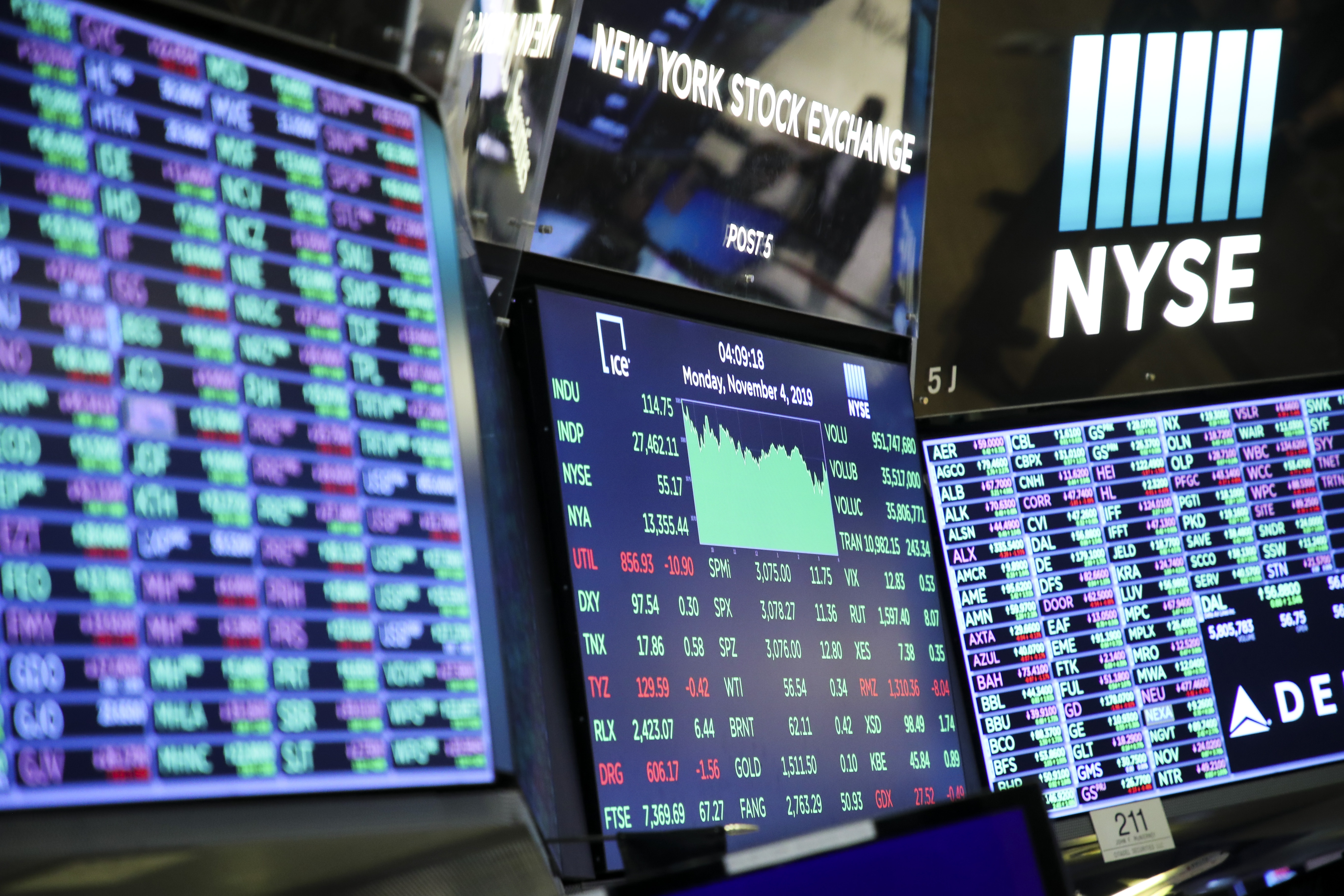
Stock market prices thus rocketed; they are up 30% in the United States. And global stock markets are now worth $86 trillion, just short of an all-time high, and equal to almost 100% of global GDP.
The main purchasers of corporate stocks are the corporations themselves. These so-called buybacks pushed up stock prices, making it easier to buy out other companies or get more credit. Much of the buyback funds were borrowed. This expansion of what Marx called "fictitious capital" has replaced investment in productive capital, and it has been financed by issuing more debt to fund the cost of servicing existing debt.
The major capitalist economies are now living in a fantasy world where the stock and bond markets insist world capitalism has never had it so good, while the real economy is stagnating in terms of output, trade, profits and investment.
The other factor enabling the capitalist economies to avoid a new slump was the rise in employment and the fall in the jobless rate. Instead of investing heavily in new technology and shedding labor, companies took in more cheap labor generated by the recession and immigration. According to the International Labor Organization, the global unemployment rate dropped to just 5%, its lowest level in almost 40 years.
In the 2010s, it seems that companies, rather than reducing their costs in the face of recession and low profitability by sacking workers and introducing labor-saving technology, opted to take on labor at low wages and with "precarious" conditions (no pensions, zero hours guaranteed under temporary contracts etc).
There was a sharp increase in "zombie companies" that make enough money to pay a low-wage workforce and service their debts, but not enough to expand.
High employment and low real GDP growth means low productivity growth, which over time means stagnating economies -- a vicious circle. The predicted AI/robot revolution in industry has yet to materialize. Globally, the annual growth in output per worker has been hovering around 2% for the past few years, compared with an annual average rate of 2.9% between 2000 and 2007.
These factors may have delayed the advent of a new slump. The fundamental driver of a capitalist economy is profit. However, neither the average profitability of capital nor the amassing of profit is rising in the major economies. According to the latest data on the net return on capital provided by the EU's AMECO database, profitability in 2020 will be 4% lower than the peak of 2017 in Europe; 8% down in Japan; and flat in the United States.
The growing profitability crisis threatens to turn the increased credit for corporations from a bonus into a burden. The Institute of International Finance estimates that global debt has now hit $250 trillion, nearly $32,500 for every person on Earth.
The World Bank joined the Bank for International Settlements in warning that the largest and fastest rise in global debt in half a century could lead to another financial crisis as the world economy slows.
World Bank chief David Malpass warned that "a sudden rise in risk premiums could precipitate a financial crisis, as has happened many times in the past."
As we enter the 11th year since the end of the last global slump, there are fundamental factors suggesting a new slump is not far away. They are: stagnant or falling profits and profitability; weak or falling investment; rising corporate debt and falling trade, amid a global trade war.
The global cost of borrowing has reached an all-time low, partly due to central bank policies of zero interest rates and "quantitative easing"; but also because there is no demand from the capitalist sector for credit to invest in productive assets or from governments to spend.
Capitalism is a system in which profits rule investment and investment rules employment and income, and that rules spending. Sooner or later, the fundamental factors of profits and investment will override the counteracting factors of low interest and unemployment.
Heiko Khoo is a columnist with China.org.cn. For more information please visit:
http://china.org.cn/opinion/heikokhoo.htm
Michael Roberts is a London based Marxist economist. He published the "The Great Recession" in 2008 and "Essays on Inequality" in 2014.
Opinion articles reflect the views of their authors, not necessarily those of China.org.cn.
If you would like to contribute, please contact us at opinion@china.org.cn.


