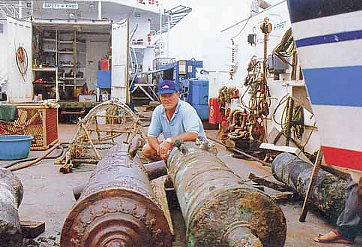
Zhang Wei, director of the Underwater Archaeology Center of China and the lead archaeologist in the Nanhai No.1 excavation mission, devoted 20 years exploring this ancient shipwreck from 1987 when it was first discovered.
Zhang Wei
This September will be the 20th anniversary of the Underwater Archaeology Center of China. The Chinese underwater technology and equipment has already reached world development level, even better than that of South Korea and Japan. It was not easy for China to reach this level in only 20 years.
During a special interview with Global People, Zhang Wei recounted the history of China's underwater archaeology and the story of his exploration of the Nanhai No.1.
Nanhai No.1 will shake the archaeology field of China
The construction of the Nanhai No. 1 Museum, also called "China's Marine Silk Road Museum," will be completed by the end of this year.
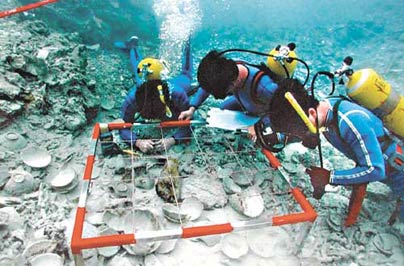
The 25-meter-long and 3,800-ton Nanhai No. 1 will be entirely salvaged from the sea and displayed in the new museum. A virtual water palace will be built for the ship with the same water quality, temperature and environment as where it rested under the sea. Then archaeologists will continue excavations upon the vessel inside the museum. Visitors can visit the scenes of underwater archaeological work in the museum.
The Nanhai No. 1 is believed to be a merchant vessel that operated between the southern Chinese region and the rest of the world. It was the first ancient vessel discovered on the "Marine Silk Road" of the South China Sea.
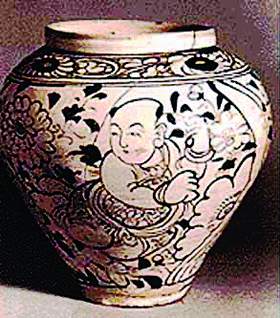
Green glazed porcelain plates, blue porcelain pottery and other rare antiques have been found during initial explorations of the ship. Archaeologists estimate that there are probably 50,000 to 70,000 relics on the ship.
The on-constructing Nanhai No. 1 Museum
China's underwater archaeology appeared together with Nanhai No.1
The Underwater Archaeology Center of China was founded in 1987, and Zhang Wei was the first director of the center. Zhang graduated from the Archaeology Department of Peking University in 1982. Before founding of the Underwater Archaeology Center, he was sent to Holland to study diving.
There wasn't enough time to recruit additional team members when the Nanhai No.1 appeared unexpectedly in August 1987.
The Guangzhou Salvage Bureau under the Ministry of Communications and a British salvage company discovered an ancient wooden sunken ship off the coast near the Shangchuan and Xiachuan islands while they were searching for abandoned Dutch shipwreck of the 17th century.
They used grab buckets to dredge up more than 200 pieces of porcelain and metal wares, but all the porcelain was accidentally destroyed. The British sailors were excited and wanted to continue exploring. After receiving the report, the State Administration of Cultural Heritage ordered the British side to cease their operations.
When pieces of porcelain were shown to Zhang Wei, he guessed that the vessel was traveling on the "Marine Silk Road."
At that time China had not yet the means to undertake exploring such a huge shipwreck. In 1988 Zhang Wei organized the first underwater training and established an underwater archaeology team. He went to the USA for some short-term training under George Bass, the father of underwater archaeology, in 1989.
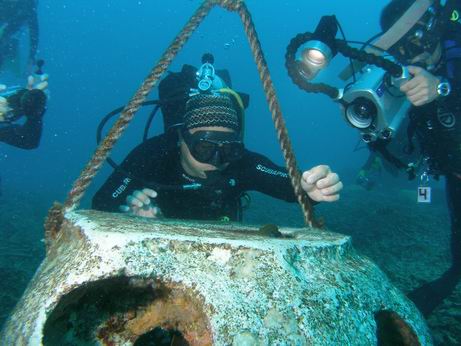
Salvage on the sunken ship started in November 1989. The ship was dubbed the "Nanhai No.1" (South China Sea No.1). Due to his simple equipment, he only reached one part of the ship and retrieved a piece of porcelain from it.
Research was suspended for ten years due to a money and labor shortage. But the Nanhai No.1 lived on in Zhang Wei's heart. In 2001 his team expanded into 40 members. Wei received HK$1.2 million from the Hong Kong Underwater Archaeology Association as a supporting grant. He also bought a map drawn by a British sailor who attended the 1987 salvage of the Nanhai No.1.
When they located the ship, they first drew an outline of the ship. They didn't enter the ship until March 2003. They opened a window and entered a little cabin of the ship. More than 4,000 delicate porcelains were found in a cupboard.
There are many precious porcelain wares in the ship, but to Zhang Wei, the ship itself is far more important than the porcelain it carried. There's few record of the shipbuilding technology 800 years ago in China. It's also rare in the world.
Mike Hatcher, the man who compelled China's underwater archaeology to develop
Mike Hatcher
The formation and development of Chinese underwater archaeology should acknowledge a controversial person named Mike Hatcher. He is a world famous salvage diver, an adventurous explorer and world-renowned treasure hunter known to many foreign governments. To the field of Chinese underwater archaeology his name equates with disaster.
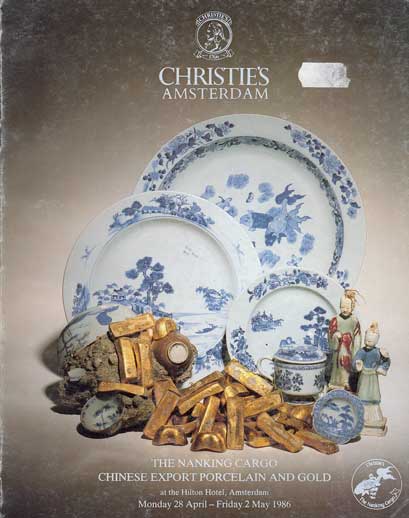
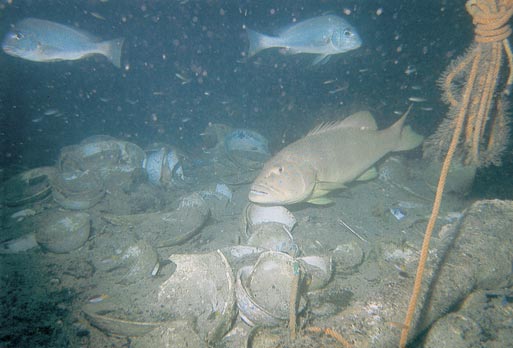
Mike Hatcher discovered the wreck of Geldermalsen (or the Nanking cargo) in May 1985 in South China Sea.
Geldermalsen, built in 1746, was a vessel belonging to the Dutch East India Company (VOC). It traveled the usual tea trade route between China's Guangdong and the Netherlands. Besides a cargo of valuable tea the ship also held a cargo of gold and a large cargo of porcelain stored in the lower decks as ballast. In January 1752 it sank into the sea.
Mike Hatcher eventually brought up an amazing haul consisting of much of the gold and over 150,000 pieces of porcelain. The ceramics originated from the Jingdezhen region, often termed the "Porcelain Capital of China" because of the area's high-quality porcelain productions.
The Chinese government was shocked to learn of these treasures being auctioned at Christies in Amsterdam in April 1986. The Chinese government researched many laws: the United Nations Convention on the Law of the Sea and many other countries sea laws but officials couldn't find any reference to legally bind Hatcher to return these assets to China.
There are only two articles referring to the underwater heritage exploration in the United Nations Convention on the Law of the Sea -- Articles 149 and 303. They say, "All objects of an archaeological and historical nature found in the area shall be preserved or disposed of for the benefit of mankind as a whole, particular regard being paid to the preferential rights of the State or country of origin, or the State of cultural origin, or the State of historical and archaeological origin." The rules in the law are mostly unclear, so it makes the "country of origin" can't recall their lost antiques according to the law.
The Chinese archaeologists had only one choice -- to buy them at the auction. China was still a poverty-stricken country at that time. Two experts on Chinese porcelains carrying US$30,000 went to the auction in Amsterdam. More than 239,000 pieces of porcelain packed two floors of the Hilton Hotel, where the auction was held.
Christies agreed to give the No.1 bidding paddle to the two Chinese bidders. But during the three day long auction they had no chance to raise their bidding paddle because they even couldn't afford the starting price. They helplessly watched more than 200,000 Chinese antiques going to other bidders. But Mike Hatcher received more than US$20 million after the auction and became the richest "salvage diver" at that time.
After the heavy blow dealt by Mike Hatcher, the Chinese government decided to found a Chinese underwater archaeology team. After establishing this team, Zhang Wei started competing with all the greedy robbers salvaging Chinese marine treasures.
"Although we all aimed to discover ancient relics, there is an essential difference between archaeologists and ‘treasure seekers': archaeologists seek to recover the history and protect all the ancient heritage as well but treasure hunters just want to maximize their profits," Zhang explained.
Sadly, the tragedy of Tek Sing (also called True Star) proved Zhang Wei indeed to be correct.
In 1999 Hatcher spent a great deal of money to hire several archaeology experts. They started to study the Dutch East India Company Archives. He suddenly found the record of the Tek Sing. The junk Tek Sing was en route from Amoy off the mainland of China to Java in 1822 when the ship hit a reef in the South China Sea. The vessel quickly sank; more lives were lost on this shipwreck than the Titanic. Hence, the Tek Sing is also called the "Oriental Titanic."
The record stated: the boat was 50 meters long, 10 meters wide and when it sank into the sea it carried more than one thousand tons of cargo: more than one million pieces of porcelain. The pottery was made in Jingdezhen and included bowls, dishes, pouring vessels, storage jars, stoves, opium containers and even urinals.
They searched for months. When the Tek Sing shipwreck was located they retrieved millions pieces of porcelain.
The quantity and quality of the Tek Sing cargo is unusual. Most of the Tek Sing cargo was blue and white porcelain, produced by painting the decoration onto white porcelain just before the final firing that applied cobalt oxide. This method has been in use in China from the 12th century to the present day.
Besides those treasures from the Jingdezhen, many other types of porcelain from some other famous kilns during Emperor Kangxi's reign (1662--1722) were located. All these antiques were well protected under the sea.
The great amount: one million pieces of porcelain, shocked everybody, but they were more shocked by Hatcher when he commanded them to smash more than 600,000 pieces and only keep 365,000. Hatcher knew better than anyone else that in the world culture relics collection market, the rare things sell higher.
After a nine day auction, Hatcher pocketed more than US$30 million.
Strive for time with more and more Hatchers
Treasure hunter Luc Heymans found a sunken boat laden with rare ceramics that had sank more than 1,000 years ago. The vessel lay hidden at the bottom of the Java Sea until 2004. The 70-meter-long and 15-meter-wide boat was then identified as belonging to a fleet operating during ancient China's Five Dynasties period (907 - 960).
This boat was not as large as the "Treasure Boat" commanded by Zheng He but it was 400 years older, making it a valuable relic dating to the beginning of the "marine silk road." To date, little information about the Five Dynasties era exists and very few things sit in the museums. This wreck fills a gaping hole.
Luc Heymans hid all the excavated treasures in a warehouse in Indonesia. He reported that he expected to auction the treasure and that the cargo was valued at several million dollars. But Indonesian police confiscated his loot until he agreed that Indonesia would receive 50 percent of proceeds from the sale of the treasures. Sadly, Chinese archaeologists could do nothing to regain these Chinese treasures.
Another case escaped the notice of the Chinese government until an auction dispute took place in 2003.
The collection, which includes pieces of Chinese porcelain and ancient pottery 2,000 years old, was to be auctioned off in August 2003 at Guernsey's in New York. The Guernsey auction house decided to suspend the event after receiving letters questioning whether the deep sea explorer Phil Greco had obtained the necessary permits from the Philippine National Museum in Manila.
"Although Greco claimed that all his collections were discovered from the coast of the Philippines, obviously, most of them were from the Chinese seaboard," Brian Hormann, an archaeologist from Australia revealed.
"From the marine matter attached in the antiques, I could confirm it was unearthed around Zhongsha and Xisha Islands of South China Sea," Hormann added.
Greco's lawyer revealed, "Greco and his company, Stallion Recoveries, have retrieved 23,000 artifacts from at least 16 shipwreck sites in the South China Sea since 1997. Some of the items, including seven massive statues, date back to the Ming Dynasty."
The American government suspended the Greco auction. But antiques stored in his house have disappeared one by one. Obviously he auctioned off his antiques online. His action has aroused the ire of international archeology experts.
(China.org.cn by Chen Lin, August 31, 2007)