久久精品30_一本色道久久精品_激情综合视频_欧美日韩一区二区高清_好看的av在线不卡观看_国产自产精品_91久久黄色_午夜亚洲福利_欧美黄在线观看_国内自拍一区

Home Tools: Save | Print | E-mail | Most Read
Part 3
Adjust font size:

Beautiful Plateau Lakes


Tibet has long enjoyed the accolade of “origin of ten thousand mountains and the source of ten thousand waters.”  Tibet’s many high mountains and snow-capped peaks have given birth to many rivers. It is rich in water resources, with many lakes and criss-crossed by rivers. The lakes in the canyon come in various sizes; the lower altitude lakes in the tropical and subtropical forests, thanks to the abundant rainfall, are larger than those at higher elevation. The scenery around the Basum Tso is delightful and the Yi’ong Tso to its north is known both for its beautiful landscape and for Yi’ong green tea. The sacred plateau lakes of Yardrok Yutso and Namtso are famous in Tibet; little grows around their shores, lending them an austere spiritual appeal. Basum Tso, on the other hand, is surrounded by vigorous greenery.


Basum Tso


Generally speaking, bamboo is a plant indicator of the southern China. For a traveler coming from the Nyingchi County seat to the foot of Serkhyim La Pass, the sight of the green bamboo growing there will give the impression of being in southern China. Having driven half way up the mountain and looking down at the trees below, they would appear tall and pale brown.  The color is due to Songluo (literally, pine-vine), a rootless brown plant that attaches itself to the trees and is a favorite food of golden monkeys. Songluo is said to be an effective herbal medicine for treating tracheitis.


We drove eastwards along the Nyang River for over an hour and then turned left. There was an abrupt change in the terrain – from smooth to precipitous. The Ba River, clear but violent, flows out of the canyon running towards a distant land way behind us.  We came to a place called “the Tiger’s mouth” (Laohukou) named, according to an experienced team-member, from a towering giant rock on the right side of the canyon.  One part of the rock faces the river, and over time this has been weathered to become a sheer cliff with overhanging crags.  Local Tibetans have made use of this marvelous creation of nature by hanging a steel cable some 100 meters in length between the cliffs on each side of the river. The cable itself is strung with many colorful prayer streamers fluttering in the wind. 


Faced with such a special sight, we all rushed for our cameras.  As tall trees were obscuring our view of the Ba River, we had to make our way through them to the cliff overlooking the river. Looking down, we trembled with fear; the river was some 60 meters below.  The branches of the trees were still stopping us getting good shots of the river; to get a full view, one had to go down out of the trees for a little way. One daring team member, holding on to branches as he went, carefully edged down a few steps to a slope, where, lying on his side, he took some shots of the river.


With its wide rushing streams and luxuriant vegetation, the Ba River valley was a most beautiful place. But there was another aspect. At the densely wooded mountain foot were several square stone blockhouses, each about 30 m high, from which one concluded that the Ba River valley had once been an important military base that had witnessed fighting.


Basum Tso is also called Tsogo Lake. The Tibetans revere mountains and lakes and deify many of them. Basum Tso is one of the well-known sacred lakes.


The Basum Tso lies 90 kilometers west of Kongpo Gyamda County, 3,538 meters above sea level and covering an area of 25.9 square kilometers. It is 15 kilometers long, 3 kilometers wide and 60 m deep, its elongated form resembling a river. Clearly reflected on the lake’s surface are the shapely figures of its surroundings - blue sky, white clouds, snow peaks and green trees. Blue waves ripple in the breeze, lake and sky forming a harmonious whole. 


There is an island in the lake, like a piece of green jade on the water. On the island amongst some trees stands the Tsozong (meaning ‘castle in a lake’) Monastery. The monastery at once seized our interest and we rushed to the lakeside. We found that the island did have a ferry and a boatman and we called to the boatman, asking him to take us across. 


The boatman came to us.  He was about 60, his old age and difficult life clear from the wrinkles on his forehead. He was called Sampo and had originally lived some 30 kilometers from here but had come to the monastery for help after his wife died. He had lived here ever since and rowed the ferry on the lake.  In fact he did not row but moved the ferry by holding with both hands a steel cable between the island and the lake shore. The ferry was tied to the cable with a rope, one end tied to the ferry the other to a wooden loop that hung on the cable. Thus, with both hands grabbing the cable, Sampo moved the ferryboat to the island.


The waters were so clear that you could see the pebbles some two meters below. What a pleasure it would have been to take a boat, looking at the fish in the water and the trees on the mountains around the lake. But we had to give up the idea because we could not find a boatman to row us.


The Tsozong monastery belongs to the Yellow Hat sect of Tibetan Buddhism and was built in the 17th century. In front of the monastery is a vacant yard as large as two basketball courts, empty apart from a river deer with an injured leg wandering about it. On the left was an old tree. The strange thing about it was that a young tree was growing out of the trunk of the old one and the phenomenon of two trees growing from a single body caused people to worship it as divine and festoon it with colorful flags. Beside the tree was a building, in which was a giant prayer-wheel, a meter in diameter and six meters high; it was made with ox-hide and painted with scriptures.  Wooden sticks stuck out from the prayer-wheel, allowing worshippers to turn it. 


After returning from the island, I walked by the lake and found several big stones, each as big as a desk, carved with Buddhist scriptures.


When it was time for our noon rest, I walked away with my camera along a road heading west, wanting to find more scenic spots in the Basum Tso area.


Cliffs and green trees lined both sides of the road. The scent of rotting leaves from the primal forest met my nostrils. The calls of nameless wild birds and beasts met my ears. When I had walked about 300 meters I shivered, afraid of meeting a black bear or wild boar. Fortunately, just then, I saw a mantra and Buddha images carved on a cliff by the roadside, and immediately stopped feeling so edgy. 


Looking into the distance I could see a burnt forest where the undergrowth and bushes were all burned out and the earth visible. Only a few trunks, blackened by the fire, remained standing, like surviving heroes looking down upon a disaster. Near to the lake I saw pine-vines hanging densely on pine branches, their light-brown color masking the green of the trees. A one-hour walk brought home to me how the vapor passing through the Yarlung Tsangpo Great Canyon was transformed into these mirror-like lakes and how it nourished the forests and bushes on the mountains.


Jomolangma Sacred Tea and Yi'ong Lake


Yi’ong, a township in Bomi County, is densely forested but sparsely populated. It is located in the hinterland of China’s second largest forest region. I was surprised to learn, on the flight to Tibet, that there are many beautiful tea plantations in Yi’ong.


After crossing the Tongmey Bridge, our jeep left the Sichuan-Tibet highway and drove northwestward along a mountain road. The road standard was very poor and there were potholes, rocks, mud and fallen trees everywhere and our jeep driver had to slow down. The Yi’ong River ran roaring along by the side of the road. Unlike the clear, clean waters of the Tongjug and Parlung Tsangpo rivers, the Yi’ong River is muddy. This is due to poor water-and-soil conservation in its upper reaches, the fast current carrying away much mud and sand downstream.


At Yi’ong we saw orderly rows of brick houses with tiled roofs; with their high rising ridges, they looked quite a considerable size. What is the reason for such large houses here in Yi’ong, far off the Sichuan-Tibet highway? We were told that the Communist Party School of Tibet Autonomous Region had once been in Yi’ong. It was said that the government of Tibet Autonomous Region had also intended moving its office to Yi’ong, because its lower altitude, warmer climate, and plentiful vegetation provided a good place to live and work, not only for Tibetan cadres but also for cadres from other parts of China, who would not suffer from high altitude reaction here.


After the Communist Party School was moved away, the site was turned into a tea plantation.


Far to the east stand snow-capped mountains. The hillsides are clad with deep green trees. Crops of golden rapeseed cloak the fields at the foot of the mountains.


By the side of the fields is a tea plantation, criss-crossed with field ridges. The tea bushes were green with luxuriant foliage and girls were busy collecting tea-leaves there. Standing by the plantation, we could hear their ringing voices wafted over by the wind from the mountains. I could find no difference between this plantation in Yi’ong and those south of the Yangtze River.  Yi’ong tea is of high quality, with tea phenols accounting for up 30.90% of its content, and contains no chemical residues.  In 1994 the Yi’ong plantation earned profits of over 900,000 yuan; its annual output was more than 100,000 kilograms of green tea. I wanted to learn more about the present situation, but failed because of the language barrier. In response to my inquiry the manager gave me an advertisement for the plantation, which reads as follows:


“Yi’ong tea is called ‘Jomolangma Sacred Tea’. Yi’ong is located at 30o.N, the same latitude as the famous tea-growing areas further east in China - Hangzhou, Dongting, Lushan, Taiping, Tunxi, Qionglai and also Qimen, where the best black tea comes from.  This latitude is a magic one so far as tea is concerned.


“Jomolangma Sacred Tea grows by Yi’ong Lake in the eastern Himalayas, which provides a perfect growing environment. Compared with other teas, Jomolangma Sacred Tea grows in a place exceptionally rich in natural resources, in a place generally acknowledged as ‘the last pure land’ on earth. Sufficient sunshine, fresh air, the right soil, and snow-water from high mountains nourish the tea plants.


“As to when, where and from what kind of tea tree Jomolangma Sacred Tea originated, according to Tibetan oral tradition, the tea began to be cultivated here when Chinese princess Wencheng came here to be married to the Tibetan king Songtsen Gampo in the 10th year of Zhenguan reign period of the Tang Dynasty (641), bringing with her tea seeds and talented workers.”


Tea bushes have always been one of southern China’s cash crops. The tea plantations in Yi’ong support the claim of the Yarlung Tsangpo Great Canyon to the title ‘the Jiangnan (south of the Yangtze River) of Tibet’. And this place has something better than Jiangnan, something Jiangnan could never have, namely the snow–capped mountains forming a beautiful backdrop to the plantations at the mountain foot.  


Although the Yi’ong tea plantation made me happy, the present state of Yi’ong Lake caused me great concern. 


Standing on an upland section of the plantation, I saw a stretch of open space before me.  This was Yi’ong lake, but it has dried out and become a white sandy wasteland with a small number of waterlogged depressions.  According to relevant historical documents, Yi’ong was an outlet lake. It was then 17 kilometers long and 1.3 kilometers wide, covering an area of 22 square kilometers, lying at an elevation of 2,200-2,220 meters and looking like a river course. But the present Yi’ong Lake in front of me looked very different.


About ten years before scientists Gao Dengyi and Wang Wei had made meteorological observations at Tongmey and Yi’ong as part of their study of vapor flow through the Yarlung Tsangpo Great Canyon. Mr. Wang Wei said: “The Yi’ong Lake I saw ten years ago was a beautiful lake, full of pure water and clear reflections of the snow mountains. The lake I see now is a white, sandy wasteland, and its water area is sharply reduced. I certainly hadn’t reckoned on this.” 


Historical data show that Yi’ong Lake was formed some 100 years ago by a mud-stone flow, which blocked downstream rivers. One evening in 1897 there was a great mud-slide disaster, the flow blocking rivers, destroying villages and killing many people. Only three child cowherds escaped. They were on the hillside, intending to spend the night there, and thus witnessed the catastrophe. The mud-stone flow formed Yi’ong Lake. With natural conditions deteriorating, the lake is now dying out. Yi’ong Lake came into being a mere one hundred years ago; compared with the slowly rolling river of history, its lifespan is all too short.


Why could the beautiful Yi’ong Lake not last forever? The reason is that the lake bed is located in the wide river valley, one formed by glaciations. This results in a slow water flow and rapidly increased silt in the lake. In the upper reaches, the mud and sand brought down to the lake have formed chains of islets. In the dry season, the present Yi’ong Lake is no longer a lake at all. Only in the rainy season does the lake have a certain amount of water. Furthermore, the well-known Lop Nor Lake in Xinjiang has already disappeared from the earth and the Qinghai Lake (Kokonor), the pearl of the plateau, has become much smaller and is divided into small lakes around its edges.  All these changes illustrate the increasing deterioration of the eco-environment. For the sake of our homeland and of later generations, we should take the problem seriously.


The Yi’ong tea plantations are irrigated by water from Yi’ong Lake. If the lake disappears some day, the tea plantations cannot survive. We hope that day will never come.


Yi’ong is deep in the Himalayas, but its name is known to many Americans. During the Chinese people’s War of Resistance Against Japan, an American aircraft crashed at the Rolgo Glacier near Yi’ong. The wreckage of the aircraft and the bodies of American pilots were found by a Tibetan hunter named Tsering Samdrup on September 17, 1993. An investigation by both American and Chinese sides proved that the American aircraft crashed in 1943 when it was making a test flight over the “Hump” of the Himalayas. Two of the three dead pilots were identified; they were Captain James Ham and Lieutenant Pierre. The discovery was a sensation in the USA. Mr. Warren Christopher, the then American Secretary of State, consulted with the Chinese government about the return of the bodies to the United States.


A ceremony was held at Beijing Airport on December 11, 1993 for the transfer by the Chinese government to the US of the three bodies that had lain at Rolgo Glacier for about half a century.  The Chinese people will never forget the three Americans’ sacrifice for the just cause nor their love for the Chinese people.

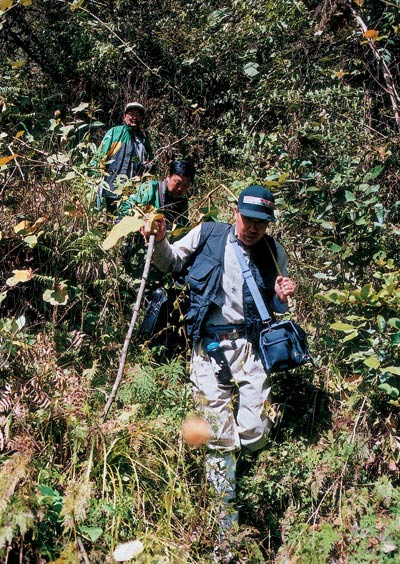
The author exploring in the Yarlung Tsangpo Great Canyon

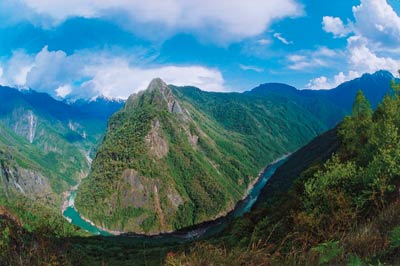
The magnificent Yarlung Tsangpo Great Canyon

Tools: Save | Print | E-mail | Most Read

Related Stories
SiteMap | About Us | RSS | Newsletter | Feedback
SEARCH THIS SITE
Copyright ? China.org.cn. All Rights Reserved ????E-mail: webmaster@china.org.cn Tel: 86-10-88828000 京ICP證 040089號(hào)
久久精品30_一本色道久久精品_激情综合视频_欧美日韩一区二区高清_好看的av在线不卡观看_国产自产精品_91久久黄色_午夜亚洲福利_欧美黄在线观看_国内自拍一区
日本成人在线看| 欧美日韩视频专区在线播放| 久色成人在线| 日韩区在线观看| 亚洲精品久久久蜜桃| 精品一区二区免费看| 欧美片网站免费| 91国在线观看| 亚洲国产精华液网站w| 日韩精品一卡二卡三卡四卡无卡| 国产精品一区二区无线| 亚洲成人在线| 欧美一卡2卡3卡4卡| 一区二区三区小说| 成人天堂资源www在线| 国产精品婷婷| 久久亚洲捆绑美女| 亚洲国产成人av好男人在线观看| 国产成人免费视频| 久久aⅴ国产紧身牛仔裤| 久久网站热最新地址| 奇米一区二区三区| 一区二区视频欧美| 在线不卡中文字幕播放| 亚洲老司机在线| 成人开心网精品视频| 久久综合亚州| 亚洲免费色视频| 97精品视频在线观看自产线路二| 久久综合图片| 亚洲精品中文在线观看| 成人av电影免费在线播放| 久久只有精品| 一区二区三区视频在线看| kk眼镜猥琐国模调教系列一区二区| 美女亚洲精品| 亚洲精品国产品国语在线app| 99精品黄色片免费大全| 欧美日韩色一区| 亚洲一区二区三区四区在线| 国产精品扒开腿做爽爽爽软件| 制服丝袜一区二区三区| 日韩精品午夜视频| 亚洲美女视频在线免费观看| 2017欧美狠狠色| 久久大逼视频| 欧美国产乱子伦| jlzzjlzz国产精品久久| 欧美一级二级在线观看| 美女视频黄 久久| 国产精品视频免费观看| 亚洲男人天堂av| 在线播放日韩| 中文字幕第一区第二区| 欧美激情91| 久久精品亚洲乱码伦伦中文| 国产成人综合亚洲网站| 欧美日韩免费观看一区二区三区| 香蕉成人伊视频在线观看| 日韩亚洲视频| 国产精品萝li| 国精品一区二区| 国产精品久久久久久一区二区三区| 成人午夜电影久久影院| 欧美不卡一区二区三区| 福利视频网站一区二区三区| 欧美一区二区三区啪啪| 国产成人亚洲综合a∨猫咪| 欧美男男青年gay1069videost| 久久99国产精品免费网站| 欧美午夜影院一区| 国产福利91精品| 精品国产伦一区二区三区观看方式 | 亚洲国产一区二区在线播放| 亚洲理伦在线| 亚洲国产精品一区二区尤物区| 亚洲一区二区在线看| 亚洲成人动漫一区| 欧美性感一区二区三区| 久久成人免费网| 日韩一区二区三区免费看 | 国产农村妇女毛片精品久久麻豆 | 亚洲免费观看在线视频| 国产欧美日韩综合一区在线观看 | 欧美一级片在线看| 99久久精品国产观看| 国产精品无圣光一区二区| 亚洲国产一区二区精品专区| 亚洲一区二区影院| 久久午夜av| 国产麻豆午夜三级精品| 久久久久国产精品麻豆| 亚洲高清网站| 三级精品在线观看| 91精品国产一区二区三区香蕉| 成人免费视频免费观看| 国产精品成人免费| 久久精品中文字幕一区二区三区| 一本色道久久综合精品竹菊| 精品在线播放免费| 精品福利一二区| 亚洲承认在线| 精品一区二区在线观看| 久久久精品蜜桃| 亚洲欧美网站| 成人午夜看片网址| 亚洲另类色综合网站| 欧美视频精品在线| 欧美国产综合视频| 亚州成人在线电影| 精品美女在线播放| 亚洲精品影院| 国产精品一区二区三区网站| 中文字幕精品—区二区四季| 久久综合精品一区| 欧美/亚洲一区| 午夜不卡在线视频| 久久久久久久综合色一本| 亚洲欧美清纯在线制服| 国产精品88888| 亚洲免费色视频| 日韩一级视频免费观看在线| 亚洲精品一区二区三| 高清在线观看日韩| 亚洲一区二区三区四区不卡| 日韩午夜精品视频| 国产美女一区| 成人v精品蜜桃久久一区| 亚洲国产视频直播| 久久久久国产精品免费免费搜索| 色8久久精品久久久久久蜜 | 一区二区三区四区五区视频在线观看| 欧美日韩久久一区| 国产精品伊人日日| 91丨九色丨蝌蚪富婆spa| 蜜乳av一区二区| 最新日韩在线视频| www久久精品| 欧美精品aⅴ在线视频| 亚洲欧美日本日韩| 欧美日韩免费观看一区| 国产精品一区二区黑丝| 亚洲a一区二区| 亚洲免费在线电影| 国产欧美一区二区在线观看| 制服.丝袜.亚洲.中文.综合| 欧美亚洲三区| 亚洲精品乱码| 欧美日韩一区二区视频在线观看| 国产乱码字幕精品高清av | 欧美日韩不卡视频| 国产精品视频福利| 亚洲精品资源| 韩国亚洲精品| 91丨porny丨国产入口| 国产伦精一区二区三区| 青青草精品视频| 午夜视频在线观看一区二区| 亚洲天堂中文字幕| 国产精品区一区二区三区 | 夜夜爽www精品| 欧美日本不卡| 欧美在线黄色| 9人人澡人人爽人人精品| 国产精品99久久久久久有的能看 | 日本网站在线观看一区二区三区| 亚洲欧美激情在线| 欧美激情一区二区三区不卡| 久久伊人蜜桃av一区二区| 精品精品国产高清一毛片一天堂| 777欧美精品| 4438x亚洲最大成人网| 欧美绝品在线观看成人午夜影视| 色猫猫国产区一区二在线视频| 国产乱人伦精品一区二区| 99人久久精品视频最新地址| 亚洲精品美女91| 国产日本精品| 亚洲欧美日韩国产一区| 免费看的黄色欧美网站| 久久成人国产| 91福利精品第一导航| 欧美亚洲一区二区在线| 欧美日韩一区中文字幕| 91精品国产高清一区二区三区 | 亚洲第一网站| 羞羞答答国产精品www一本| 一本在线高清不卡dvd| 色婷婷av一区二区三区大白胸 | 国产成人福利片| 94色蜜桃网一区二区三区| 午夜久久资源| 亚洲国产一区二区精品专区| 日韩午夜激情| 免费日韩av片| 欧美性淫爽ww久久久久无| 日韩欧美久久久| 国产精品麻豆99久久久久久| 艳妇臀荡乳欲伦亚洲一区| 日本在线不卡视频|