The State Council Information Office on Thursday published a white paper entitled China's Space Activities in 2006. The document is composed of five chapters -- Aims and Principles of Development; Progress Made in the Past Five Years; Development Targets and Major Tasks for the Next Five Years; Development Policies and Measures; International Exchanges and Cooperation.
Half a century has passed since China embarked on the splendid road to developing its own space industry. For 50 years, China has trail-blazed in this field. Its achievements have been eye-catching, and the nation now ranks among the world's most advanced countries in some crucial fields of space technology. China has always followed the road of peaceful development, and maintained that outer space should be explored for the common wealth of mankind. While supporting all international efforts that utilize outer space for peaceful purposes, China continues to explore and use the cosmos to make new contributions to the development of humanity's space programs.
China's space industry has made great progress since the Chinese government issued the China's Space Activities white paper in 2000. This is the second white paper that the Chinese government has issued since 2000 concerning China's space activities. The full text of the white paper follows:
China's Space Activities in 2006
Preface
I. Aims and Principles of Development
II. Progress Made in the Past Five Years
III. Development Targets and Major Tasks for the Next Five Years
IV. Development Policies and Measures
V. International Exchanges and Cooperation
Preface
Space activities around the world have been flourishing in the first few years of the 21st century. Leading countries in the area of spaceflight have formulated or readjusted their development strategies, plans and goals in this sphere. The role of space activities in a country's overall development strategy is becoming increasingly salient, and their influence on human civilization and social progress is increasing.
It has been 50 splendid years since China embarked on the road to develop its space industry, starting in 1956. For half a century, China has worked independently in this field. It has made eye-catching achievements, and ranks among the world's most advanced countries in some important fields of space technology. China is unflinching in taking the road of peaceful development, and always maintains that outer space is the common wealth of mankind. While supporting all activities that utilize outer space for peaceful purposes, China actively explores and uses outer space and continuously makes new contributions to the development of man's space programs.
China has set the strategic goal of building itself into a well-off society in an all-round way, ranking it among the countries with the best innovative capabilities in the first 20 years of the 21st century. The development of the space industry in China now faces new opportunities and higher requirements. In the new stage of development, China will adhere to the scientific outlook on development as guidance, center its work on the national strategic goals, strengthen its innovative capabilities and do its best to make the country's space industry develop faster and better.
China's space industry has made great progress since the Chinese government issued the white paper China's Space Activities in 2000. In order to give people around the world a better understanding of the development of China's space industry over the past five years and its plans for the near future, we hereby offer an expanded introduction to some related issues.
I. Aims and Principles of Development
The aims of China's space activities are: to explore outer space, and enhance understanding of the Earth and the cosmos; to utilize outer space for peaceful purposes, promote human civilization and social progress, and benefit the whole of mankind; to meet the demands of economic construction, scientific and technological development, national security and social progress; and to raise the scientific quality of the Chinese people, protect China's national interests and rights, and build up the comprehensive national strength.
When developing the space industry, China will follow the principles guiding the development of the country's scientific and technological programs, namely, making innovations independently, making leapfrogging development in key areas, shoring up the economy and leading future trends. In the new development stage, the principles of development for China's space industry are as follows:
-- Maintaining and serving the country's overall development strategy, and meeting the needs of the state and reflecting its will. China considers the development of its space industry as a strategic way to enhance its economic, scientific, technological and national defense strength, as well as a cohesive force for the unity of the Chinese people, in order to rejuvenate China. Since the space industry is an important part of the national overall development strategy, China will maintain long-term, stable development in this field.
-- Upholding independence and self-reliance policy, making innovations independently and realizing leapfrogging development. China relied completely on itself when it developed its space industry from scratch, and has made constant progress through making independent innovations. Therefore, increasing the capability for independent innovation is a strategic basis for developing the space industry. In light of the country's actual situation and needs, China will focus on certain areas while ignoring less-important ones. It will choose some limited targets, concentrate its strength on making key breakthroughs and realize leapfrogging development.
-- Maintaining comprehensive, coordinated and sustainable development, and bringing into full play the functions of space science and technology in promoting and sustaining the country's science and technology sector, as well as economic and social development. China will strengthen strategic planning, making overall plans for the development of space technology, space application and space science. It will encourage progress in space science and technology to promote the development of high technology and industry, as well as the transformation and upgrading of traditional industries. Meanwhile, it will protect the space environment, and develop and utilize space resources in a rational manner.
-- Adhering to the policy of opening up to the outside world, and actively engaging in international space exchanges and cooperation. China supports all activities that utilize outer space for peaceful purposes. It will strengthen exchanges and cooperation in this field with other countries on the basis of the principles of equality, mutual benefit, peaceful utilization of outer space and common development.
II. Progress Made in the Past Five Years
From 2001 to 2005, China's space industry has developed rapidly, making many achievements. A group of research and development and testing bases of the advanced world level has been built, and the system of research, design, production and testing has been further improved, markedly enhancing the country's basic capabilities in space science and technology. With breakthroughs in important key technologies, the overall level of China's space technology has been improved remarkably. Having made a historic breakthrough in manned spaceflight, China has embarked on a comprehensive lunar exploration project. Space application systems have taken shape, the range of application has been further expanded, application benefits have been noticeably enhanced, and important achievements have been made in space scientific experiments and research in this regard.
Space Technology
1. Man-made satellites. Over the past five years, China has independently developed and launched 22 different types of man-made satellites, upgrading its overall level in this field markedly. On the basis of the four satellite series initially developed, China has developed two more satellite series, to bring the total to six -- the recoverable remote-sensing satellites, "DFH" (Dongfanghong, or The East is Red) telecommunications and broadcasting satellites, "FY" (Fengyun, or Wind and Cloud) meteorological satellites, "SJ" (Shijian, or Practice) scientific research and technological experiment satellites, "ZY" (Ziyuan, or Resources) Earth resource satellites, and "Beidou" (Plough) navigation and positioning satellites. In addition, the oceanic satellite series will come into being soon. China has speeded up the implementation of the plan to establish "a constellation of small satellites for environment and disaster monitoring and forecasting." Research and development of the payload of some new, high-performance satellites have been successful, and many application satellites have begun regular operation. The Fengyun I and Fengyun II meteorological satellites have been listed by the World Meteorological Organization in the international satellite series for meteorological services. Important breakthroughs have been made in key technologies related to the common platform for big geostationary orbit satellites. Periodical achievements have been made in the research and development of large-capacity telecommunications and broadcasting satellites. Substantial progress has been made in the research and development, and application of small satellites.
2. Launching vehicles. Over the past five years, "Long March" rockets independently developed by China have made 24 consecutive successful flights, and their major technological functions and reliability have been notably upgraded. From October 1996 to the end of 2005, "Long March" rockets made 46 consecutive successful flights. Important breakthroughs have been made in key technologies of the new-generation launching vehicles. Research and development of the 120-ton thrust liquid-oxygen/kerosene engine and the 50-ton thrust hydrogen-oxygen engine are proceeding smoothly.
3. Launching sites. The construction of three launching sites at Jiuquan, Xichang and Taiyuan, has made new progress, and their comprehensive test and launch capabilities have been enhanced. Various launching vehicles, man-made satellites, unmanned experimental spacecraft and manned spacecraft have been successfully launched from the three launching sites many times.
4. Telemetry, tracking and command (TT&C). The overall performance of the country's TT&C network has been improved and expanded. It has provided TT&C support to man-made satellites traveling in different orbits, and to unmanned experimental spacecraft and manned spacecraft during launch, operation in orbit, return and landing.
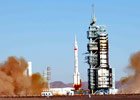
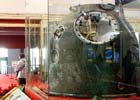
5. Manned spaceflight. On November 20 and 21, 1999, China launched and retrieved the first "Shenzhou" unmanned experimental spacecraft. It then launched three more "Shenzhou" unmanned experimental spacecrafts not long afterwards. On October 15 and 16, 2003, it launched and retrieved the "Shenzhou V" manned spacecraft, China's first of its kind. Having mastered the basic technologies for manned spacecraft, China became the third country in the world to develop manned spaceflight independently. From October 12 to 17, 2005, the "Shenzhou VI" manned spacecraft completed a five-day flight with two astronauts on board. This was the first time for China to have men engage in experiments in space, another major achievement in the sphere of manned spaceflight.
6. Deep-space exploration. Advance studies and engineering work of the lunar-orbiting project has been conducted, making important progress.
Space Application
1. Satellite remote-sensing. The fields and scale where satellite remote-sensing is used have been constantly expanded. Breakthroughs have been made in a large number of key application technologies; infrastructure facilities have been strengthened; the technological level and operational capabilities of the application system have been notably improved; and a national satellite remote-sensing application system has taken shape. China has built and improved the National Remote-Sensing Center, National Satellite Meteorology Center, China Resources Satellite Application Center, National Satellite Oceanic Application Center and China Remote-Sensing Satellite Ground Station, as well as satellite remote-sensing application and certification institutes of relevant state departments, provinces and cities. An optical remote-sensing satellite radiation caliberation station has also been completed and put into operation. Many remote-sensing products and services are provided by using data resources obtained from observation of the Earth by both Chinese and foreign satellites of multiple wavelengths of wide scope and long duration. Satellite remote-sensing application systems have been put into regular operation in many important fields, particularly in meteorology, mining, surveying, agriculture, forestry, land mapping, water conservancy, oceanography, environmental protection, disaster mitigation, transportation, and regional and urban planning. They are playing an important role in the nationwide land resources survey, ecological construction and environmental protection, as well as in major state projects, such as the South-North Water Diversion Project, the Three Gorges Project and the Project to Transmit Natural Gas from West to East.
2. Satellite telecommunications and broadcasting. Satellite telecommunications and broadcasting technologies are developing rapidly, their application is becoming more extensive and an application industry in this field has taken initial shape. By the end of 2005, China had more than 80 international and domestic telecommunications and broadcasting Earth stations, and 34 satellite broadcasting and TV link stations. Dozens of departments and some large corporations have established altogether some 100 satellite specialized communication networks and more than 50,000 Very Small Aperture Terminals (VSAT). The development and application of satellite radio and TV broadcasting services has increased the coverage and improved the quality of the programs all over China, particularly in the vast countryside. Satellite telecommunications and broadcasting technologies play an irreplaceable role in the projects "to give every village access to broadcasting and TV" and "to give every village access to telephones." A satellite tele-education broadband network and a satellite tele-medicine network have been established. As a member of the International Maritime Satellite Organization, China has established a maritime satellite communication network covering the whole world, ranking it among the advanced countries in the application of international mobile satellite communication.
3. Satellite navigation and positioning. China has implemented several major related projects, one of which is called "industrialization of satellite navigation and positioning applications." By employing domestic and foreign navigation and positioning satellites, China has made great progress in the development, application and services of satellite navigation and positioning technologies. The range and fields where satellite navigation and positioning are applied are being continuously expanded and the size of the national market for satellite navigation and positioning doubles every two years. Satellite navigation and positioning technologies have been widely used in transportation, basic surveying and mapping, project surveys, resources investigation, earthquake monitoring, meteorological exploration, oceanic surveys, and so forth.
Space Science
1. Sun-Earth space exploration. In cooperation with the European Space Agency (ESA), China has carried out the Double Star Satellite Exploration of the Earth's Space Plan. Together with the four space exploration satellites of the ESA, China's satellites completed the world's first joint, synchronous six-point exploration of the Earth's space, obtaining important data. Advance research into exploration of the lunar and the solar systems was also conducted.
2. Micro-gravity scientific experiments and space astronomical observation. China has carried out many items of experimental research in such fields as space life science, space materials science and micro-gravity science by using the "Shenzhou" spacecraft and recoverable satellites. It has also conducted trial tests of mutant crop breeding and high-power astronomical observation in space, and scored important achievements.
3. Space environment research. China has conducted research into space environment monitoring and forecasting, and made important progress in the observation, reduction and forecasting of space debris. It now has the ability to make forecasts of the space environment on a trial basis.
III. Development Targets and Major Tasks for the Next Five Years
"The Outline of the 11th Five-Year Program for National Economic and Social Development" and "The National Guideline for Medium- and Long-term Plans for Science and Technology Development (2006-2020)" formulated by the Chinese government in 2006 put the space industry in an important position. Based on the above two documents, the Chinese government has drawn up a new development plan for China's space industry, defining development targets and major tasks for the next five years or more. According to this plan, the country will launch and continue key space projects, including manned spaceflight, lunar exploration, high-resolution Earth observation, new-generation carrier rockets, and a group of priority projects in key sectors. It will also strengthen basic research, make arrangements ahead of schedule, develop frontier space technology, and accelerate progress and innovation in space science and technology.
Development Targets
To remarkably improve the country's capabilities and reliability of carrier rockets in space; to build a long-term, stably operated Earth observation system, and a coordinated and complete national satellite remote-sensing application system; to set up a relatively complete satellite telecommunications and broadcasting system, and remarkably enhance the scale and economic efficiency of the satellite telecommunications and broadcasting industry; to establish a satellite navigation and positioning system step by step to meet the demand, and bring into being China's satellite navigation and positioning application industry; and to achieve the initial transformation of applied satellites and satellite application from experimental application type to operational service type.
To enable astronauts to engage in extravehicular activities, and achieve spacecraft rendezvous and docking; to realize the lunar-orbiting probe; and make important and original achievements in space science research.
Major Tasks
-- To develop nontoxic, pollution-free, high-performance, low-cost and powerful thrust carrier rockets of the new generation, eventually increasing the carrying capacity of near-Earth orbiters to 25 tons, and that of geostationary orbiters to 14 tons; develop in an overall way the 120-ton thrust liquid-oxygen/kerosene engine and the 50-ton thrust hydrogen-oxygen engine; and increase the reliability and adaptability of the present "Long March" carrier rockets.
-- To start and implement a high-resolution Earth observation system; develop and launch new-type sun synchronous orbit and geostationary-orbit meteorological satellites, oceanic satellites, Earth resources satellites, small satellites for environmental protection and disaster mitigation monitoring and forecasting; and to start research into key technologies of new-type remote-sensing satellites, including stereo mapping satellites. To form an all-weather, 24-hour, multi-spectral, differential-resolution Earth observation system for stable operation, and achieve stereoscopy and dynamic monitoring of the land, atmosphere and sea.
-- To make an overall plan for the development of a satellite remote-sensing ground system, and an application system; to integrate and improve the present satellite remote-sensing ground system, establish and improve a national satellite remote-sensing data center, and set up and improve supporting facilities for quantitative application, including a remote-sensing satellite radiation calibration station, and preliminarily materialize the common sharing of remote-sensing data to serve the public good; to set up a satellite environmental application institute and a satellite disaster-mitigation institute, forming several important application systems; and to make breakthroughs in major satellite remote-sensing application fields.
-- To develop and launch geostationary orbit telecommunications satellites and direct TV broadcasting satellites with long operating life, high reliability and large capacity; and to develop satellite technologies for live broadcast, broadband multi-media, emergency telecommunications, and telecommunications and broadcasting for public service. To continuously develop and improve the service functions of satellite telecommunications and broadcasting, and increase value-added services in the field of satellite telecommunications and broadcasting. To actively accelerate the commercialization of satellite telecommunications and broadcasting, and expand the industrial scale of telecommunications and broadcasting satellites and applications.
-- To improve the "Beidou" navigation satellite test system, and launch and implement the "Beidou" navigation satellite system project. To develop independently application technologies and products in applying satellite navigation, positioning and timing service, and set up a standard positioning service supporting system and popular application terminus related to satellite navigation and positioning, expanding the application fields and market.
-- To develop and launch new-technology test satellites, conduct more spaceflight experiments of new technologies, materials, apparatus and equipment, enhance the independent research and development level, and increase product quality and reliability.
-- To develop and launch the "breeding" satellite, and promote integration of space technology and agricultural breeding technology and expand the application of space technology in the field of agricultural science research.
-- To develop scientific satellites, including space telescope and new-type recoverable satellites; to conduct basic research in the fields of space astronomy, space physics, micro-gravity science, and space life science, and make important and original achievements in these fields; and to strengthen the ability to monitor the space environment and space debris, and initially set up a space environment monitoring and warning system.
-- To enable astronauts to engage in extravehicular operations and conduct experiments on spacecraft rendezvous and docking; and to carry out research on short-term manned and long-term autonomously orbiting space laboratories, which is of certain application scale, and carry out follow-up work of manned spaceflight.
-- To realize lunar-orbiting probe, make breakthroughs in developing basic technologies for lunar exploration, and develop and launch China's first lunar probe satellite "Chang'e I" for lunar science and lunar resources exploration; and to carry out final-period work for the lunar exploration project.
-- To increase the comprehensive experimental ability and returns of spacecraft launching sites, optimize the layout, and enhance the reliability and automation level of the facilities and equipment of the sites.
-- To advance the technology and capability of TT&C network, enlarge the coverage rate of the network, and acquire the ability to satisfy the basic demand for deep-space exploration.
IV. Development Policies and Measures
The Chinese government, under the guidance of the scientific outlook on development, has made overall plans in the three fields of space technology, space application and space science to promote independent innovations in space science and technology, make space activities create more economic and social benefits, ensure the orderly, normal and healthy development of space activities, and achieve the set goals.
The major policies and measures for China's space industry at present and in the near future are as follows:
-- To make overall plans for and deploy rationally space activities. To give priority to the developmen
t of applied satellites and satellite applications, develop in a proper way manned spaceflight and deep-space exploration, and give active support to space science exploration.
-- To muster strength in implementing key space scientific and technological projects, strengthen basic research and make plans for frontier technologies in advance. To muster superior forces to make leapfrogging development in space science and technology by making breakthroughs in core technologies and resources integration. To increase the sustainable innovative ability of space science and technology through strengthening basic research in the space field and developing several frontier technologies in advance.
-- To promote space application and accelerate the industrialization of space activities. To strengthen the development of space application technologies, promote resource sharing and expand the scope of application. With emphasis on telecommunications satellites, satellite telecommunications, satellite remote-sensing, satellite navigation and carrier rockets, to vigorously construct a comprehensive chain of space industry covering satellite manufacturing, launching services, ground equipment production and operational services. To strengthen the spread, transformation and secondary development of space technology, and transform and upgrade the traditional industries.
-- To attach importance to the infrastructure construction of the space science, technology and industry. To strengthen the building of infrastructure facilities for developing, producing and experimenting with spacecraft and carrier rockets. To give support to key laboratories and engineering research centers of space science and technology, strengthen the work on informatization, intellectual property rights and standardization of space activities.
-- To promote the building of a space technology innovation system. To guide the reform, restructuring, transformation and updating of the space science, technology and industry, and accelerate the building of world-class large space corporations. To actively construct a space technology innovation system integrating production, education and research with space science and technology enterprises and national scientific research institutes at the core.
-- To improve the scientific management of space activities. To adapt to the progress of the socialist market economy, actively make innovations in the system and mechanisms of scientific management, improve the sense of quality and profit among personnel, apply system engineering and other modern management tools to promote scientific management, increase system quality, minimize system risks and enhance comprehensive benefits.
-- To strengthen legislation work. To formulate laws, regulations and space industrial policies for guiding and regulating space activities, increase the level of administration by law, and create a legislative environment favorable for the development of space activities.
-- To guarantee input of funds for space activities. The Chinese government will increase input to the space industry, and at the same time encourage the establishment of a diverse, multi-channel space funding system, so as to guarantee the sustainable and stable development of the space industry.
-- To encourage people of all walks of life to participate in space-related activities, including encouraging industrial enterprises, scientific research institutes, commercial corporations, institutions of higher learning and social organizations, under the guidance of national space policies, to give full play to their advantages, take an active part in space activities, and participate in international space-related exchanges and cooperation. To encourage satellite operation enterprises and application units to use Chinese satellites and satellite-application products.
-- To strengthen the fostering of talented people for the space industry. To spare no efforts for the education and cultivation of personnel, give attention to whetting their sense of innovation through practice. In particular, it is necessary to pay more attention to fostering a rationally structured contingent of young and highly qualified space scientists and engineers. To make efforts to publicize space knowledge and culture, and attract more outstanding personnel into the space industry.
The Chinese government continues to strengthen its administration and macro-guidance concerning space activities. The China National Space Administration (CNSA) is the country's governmental organization responsible for the management of space activities for civilian use and international space cooperation with other countries, and responsible for implementing corresponding governmental functions.
V. International Exchanges and Cooperation
The Chinese government holds that outer space is the common wealth of all mankind, and each and every country in the world enjoys equal rights to freely explore, develop and utilize outer space and celestial bodies; and that all countries' outer space activities should be beneficial to the economic development, social progress of nations, to security, subsistence and development of mankind, and to friendly cooperation between people of different countries.
International space cooperation should adhere to the fundamental principles stated in the "Declaration on International Cooperation in the Exploration and Use of Outer Space for the Benefit and in the Interest of All States, Taking into Particular Account the Needs of Developing Countries." China maintains that international space exchanges and cooperation should be strengthened on the basis of equality and mutual benefit, peaceful utilization and common development.
Fundamental Policies
The Chinese government has adopted the following policies with regard to developing international space exchanges and cooperation:
-- Adhering to the principle of independence and taking the initiative in our own hands, carrying out active and practical international cooperation in consideration of the overall, rational utilization of domestic and international markets and resources to meet the needs of the national modernization drive.
-- Supporting activities regarding the peaceful use of outer space within the framework of the United Nations. Supporting all inter- governmental activities for promoting the development of space technology, space application and space science as well as those conducted between non-governmental space organizations.
-- Attaching importance to space cooperation in the Asia-Pacific region, and supporting other regional space cooperation around the world.
-- Reinforcing space cooperation with developing countries, and valuing space cooperation with developed countries.
-- Encouraging and endorsing the efforts of domestic scientific research institutes, industrial enterprises, institutions of higher learning, as well as social organizations to develop international space exchanges and cooperation in different forms and at different levels under the guidance of relevant state policies, laws and regulations.
Major Events
Over the past five years, China has developed bilateral space cooperation with a host of countries. It has successively signed 16 international space cooperation agreements and memorandums with 13 countries, space agencies and international organizations, and propelled multilateral cooperation in space technology and its application in the Asia-Pacific region and the process of establishing a space cooperation institution for the region. China has joined relevant activities sponsored by the United Nations and other relevant international organizations, and supported international space commercial activities. These measures have yielded positive results.
1. Bilateral cooperation: Over the past five years, China has signed cooperation agreements on the peaceful use of outer space and space project cooperation agreements with Argentina, Brazil, Canada, France, Malaysia, Pakistan, Russia, Ukraine, the ESA and the European Union Committee, and has established space cooperation subcommittee or joint commission mechanisms with Brazil, France, Russia and Ukraine. It has signed space cooperation memorandums with space organizations of India and Britain, and has conducted exchanges with space-related bodies of Algeria, Chile, Germany, Italy, Japan, Peru and the United States.
China continues to collaborate with Brazil on the Earth resources satellite program. Following the successful launch of the Sino-Brazil Earth Resources Satellite 02 in October 2003, the Chinese and Brazilian governments signed supplementary protocols on the joint research and manufacturing of satellites 02B, 03 and 04, and on cooperation in a data application system, maintaining the continuity of data of Sino-Brazil Earth resources satellites and expanding the application of such satellites' data regionwide and worldwide.
China and France have developed extensive space exchanges and cooperation. Under the mechanism of the Sino-French Joint Commission on Space Cooperation, the exchanges and cooperation between the two countries have made important progress in space science, Earth science, life science, satellite application, and satellite TT&C.
The space cooperation between China and Russia has produced marked results. Within the framework of the Space Cooperation SubCommittee of the Committee for the Regular Sino-Russian Premiers' Meeting, a long-term cooperation plan has been determined. In addition, exchanges and cooperation in the sphere of manned spaceflight have been carried out, including astronaut training.
China has unfolded space exchanges and cooperation with Ukraine. Under the mechanism of the Sino-Ukrainian Joint Commission on Space Cooperation, the two countries have determined cooperation plans.
China and the ESA have carried out the Sino-ESA Double Star Satellite Exploration of the Earth's Space Plan. China's relevant departments and the ESA have implemented the "Dragon Program," involving cooperation in Earth observation satellites, having so far conducted 16 remote-sensing application projects in the fields of agriculture, forestry, water conservancy, meteorology, oceanography and disasters.
2. Multilateral cooperation: In October 2005, the representatives of China, Bangladesh, Indonesia, Iran, Mongolia, Pakistan, Peru and Thailand signed the Asia-Pacific Space Cooperation Organization (APSCO) Convention in Beijing, and in June 2006 Turkey signed the Convention as well. APSCO will be headquartered in Beijing. This marks a significant step toward the official establishment of APSCO.
China continues to promote the Asia-Pacific Region Multilateral Cooperation in Small Multi-Mission Satellites Project. Together with Bangladesh, Iran, the Republic of Korea, Mongolia, Pakistan and Thailand, China has started the joint research, manufacture and application of small multi-mission satellites, to be launched in 2007.
China takes a positive part in activities organized by the United Nations Committee on the Peaceful Uses of Outer Space (UN COPUOS) and its Scientific and Technical Subcommittee and Legal Subcommittee. China has acceded to the "Treaty on Principles Governing the Activities of States in the Exploration and Use of Outer Space, Including the Moon and Other Celestial Bodies," "Agreement on the Rescue and Return of Astronauts, and on the Return of Objects Launched into Outer Space," "Convention on International Liability for Damage Caused by Space Objects," and "Convention on the Registration of Objects Launched into Outer Space," and strictly fulfils its responsibilities and obligations. China actively participates in the relevant activities organized by the UN COPUOS to implement the recommendations made by the Third United Nations Conference on the Exploration and Peaceful Uses of Outer Space (UNISPACE III). In particular, China, alongside Canada and France as co-chairs, has propelled the work of the space-system-based disaster mitigation and disaster management of the Action Team (AT-7) joined by 40 member states of COPUOS and 15 international organizations, and has actively taken part in the work of an ad hoc expert group to study the possibility of creating a coordination mechanism for disaster mitigation and management. China has acceded to a disaster mitigation mechanism consisting of space organizations from different countries in the light of the Charter on Cooperation to Achieve the Coordinated Use of Space Facilities in the Event of Natural or Technological Disasters. In cooperation with the UN, China has hosted UN/ESA/China basic space science workshops and a UN/China workshop on tele-health development in Asia and the Pacific. China has also hosted, in collaboration with the Multilateral Cooperation Secretariat of the Asia-Pacific Space Cooperation Organization and the UN Economic and Social Commission for Asia and the Pacific, training courses and symposia on space technology applications, and has provided financial support for these activities. China has also taken part in a program promoting the application of space for sustainable development in Asia and the Pacific organized and implemented by the UN Economic and Social Commission for Asia and the Pacific.
China has actively participated in activities organized by the Inter-Agency Space Debris Coordination Committee, started the Space Debris Action Plan, and strengthened international exchanges and cooperation in the field of space debris research. It has participated in the relevant activities organized by the Committee on Earth Observation Satellites (CEOS), and hosted the 18th CEOS plenary and 20th anniversary activities in Beijing in November 2004. In May 2005, China officially became a member of the ad hoc inter-governmental Group on Earth Observations (GEO), and an executive committee member as well. In July 2006, China held in Beijing the 36th COSPAR (Committee on Space Research) Scientific Assembly and the 8th International Lunar Exploration Working Group (ILEWG) International Conference on the Exploration and Utilization of the Moon. In addition, China has taken part in the relevant activities of the International Telecommunications Union (ITU), World Meteorological Organization (WMO), International Astronautical Federation (IAF), and Committee on Space Research (COSPAR).
3. Commercial activities: China launched a communications satellite "APSTAR VI" into orbit in April 2005. In December 2004, China signed a commercial contract for a communications satellite with Nigeria, providing in-orbit delivery service to that country. In November 2005, China signed a commercial contract for a communications satellite with Venezuela, providing in-orbit delivery service and associated ground application facilities.
Priority Cooperation Areas
The Chinese government continuously renders support to international exchanges and cooperation in space technology, space application and space science, with priority given in the next five years to cooperation in the following areas:
-- Scientific research into space astronomy, space physics, micro-gravity science, space life science, lunar exploration and planet exploration;
-- Data sharing and services of Earth observation satellites, and application and research in the areas of resources investigation, environment monitoring, prevention and mitigation of disasters, and global climate change monitoring and forecasting;
-- Sharing of space TT&C network resources, and mutual provision of space TT&C assistance;
-- Design and manufacture of communications satellites and Earth observation satellites;
-- Manufacture of ground facilities and key components of satellite communications, remote sensing, and navigation and positioning;
-- Application of satellite communications and broadcasting in tele-education and tele-medicine, and expansion of application scope of satellite broadcasting and TV, and related services for satellite navigation and positioning;
-- Commercial satellite launching services, export of satellites and their components and parts, and construction and services of satellite ground TT&C and application facilities;
-- Exchanges and training of personnel in various fields of space activities.
(China.org.cn October 12, 2006)