| Tools: Save | Print | E-mail | Most Read |
| HK Universities -- a Threat to the Mainland? |
| Adjust font size: |
With over 30,000 mainland students applying for some 1,300 places in Hong Kong universities this year, questions are being asked about how the mainland and Hong Kong tertiary education systems compare. Although there are fears that this exodus of the mainland's brightest minds could have a negative impact on the universities here, an official from the mainland education ministry believes that the exchange of talent is actually a positive thing for both education systems. As for top universities in Beijing and Hong Kong vying for the country's best students, Wang said: "We are aware of the issues. The relevant departments are conducting evaluation and research to find a better policy which would benefit both mainland and Hong Kong university recruitment." Further, he refuted claims that Hong Kong recruitment drives would badly affected mainland universities. Liu Mingli, director of Peking University's (Beida) recruitment office, told Guangzhou Daily on July 23 that it is unfair that the mainland universities have to compete with Hong Kong for students. "The recruiting systems are different, which is not fair. Most Hong Kong universities appear to be independent of the mainland's recruitment system. For students who apply for places in Hong Kong universities, their entry to mainland universities is not subsequently affected. But the reverse is true. So it's zero risk for them as they can apply to several universities at the same time." As for the so-called "quota reservation fee" required by Hong Kong universities, which aims to ensure that students register once their applications have been approved, Liu said that this practice is not allowed under the mainland system.
"If a student with offers from both Beida and a Hong Kong university chooses the Hong Kong university, Beida will not know about this until the day of freshmen registration, which means that that student's quota is wasted. And because we don't enroll students after the stated application period, that vacancy is not filled and it's not fair to others who want to enter our university," Liu added. Hong Kong universities got the green light from the Ministry of Education to recruit mainland undergraduates in 2003. Prior to that, while not permitted to recruit students directly, several Hong Kong universities had students "recommended" to them by some of the mainland's more prestigious institutions including Beida, Tsinghua and Fudan universities. Such referred students were enrolled via informal or unofficial student exchange programs. In 2003, Hong Kong was allowed to recruit students from six provinces and municipalities. The number was increased to 10 in 2004, 17 in 2005, and 20 today. As a result of aggressive marketing and promotional efforts, Hong Kong universities have become quite popular among mainland high school graduates. This year alone, over 30,000 mainland students, a record high, applied for a combined 1,300 places in eight Hong Kong universities: Hong Kong University of Science and Technology (HKUST), University of Hong Kong, Hong Kong Polytechnic University, Chinese University of Hong Kong, Hong Kong Baptist University, Open University of Hong Kong, Hong Kong Academy for Performing Arts, and Chu Hai College of Higher Education. One of the main reasons why these institutions are so popular is the apparently better employment prospects. Last year, 99 percent of University of Hong Kong graduates found work or continued studying, and the average salary earned was more than US$1,800 a month. Less than 80 percent of university graduates on the mainland found employment last year, and the average salary was about 2,000 yuan (US$250) a month. Nonetheless, what mainland students fail to realize is that the higher cost of living in Hong Kong acts as an equalizer. According to the latest Cost of Living Survey released in late June by Mercer Human Resource Consulting, Hong Kong is the fourth most expensive city in the world. Another alternative is in the offing for mainland students. Macao universities started their mainland recruitment drives in 2001. Five Macao tertiary institutions have also been given the go-ahead to enroll 1,200 students from 20 provinces. But it would seem that Hong Kong universities are still the preferred choice. K.C. Chan, dean of HKUST Business School, the department with the highest entry requirements in the university, told China Daily on July 25 that Hong Kong universities have an advantage in teaching methods over mainland schools. "We encourage students to be creative and independent," he said. "We offer them more individualized guidance and much more one-on-one communication."
Moreover, the English portion of the interview is an important benchmark in the recruitment process. In addition, Hong Kong institutions look for communication skills, logical thinking, and a sound personality, he said. He believes that what mainland students really love is the education environment in Hong Kong. "The biggest attraction for me is the teachers. Many teachers in our schools are world-famous scholars, some of whom are leaders in their fields," according to Beijing native Wei Yifan, a student at the Chinese University of Hong Kong, speaking with Xinhua News Agency yesterday. Qiu Tan, a former Hong Kong Baptist University student, said what impressed him the most was the library: "Six out of seven floors of the library are filled with original English books, and in newer editions than on the mainland. Even the variety of Chinese books is wider, some aren't even available on the mainland." Jia Huiyu, a postgraduate from Chinese University of Hong Kong, added that Hong Kong universities offer students plenty of opportunities to do internships abroad: "We have the opportunity to go to Canada this year. We have more exposure to information about international conferences here than we do on the mainland. And Hong Kong universities will provide stipends when you participate in overseas exchange programs," she said. But Wei warned that students from the mainland should think twice before they leave for Hong Kong: "Some parents are worried about the English language teaching, but I feel the bigger challenge is not being able to speak Cantonese. You will feel isolated if you cannot communicate with Hong Kong students and society." This is why mainland students now undergo a one-year preparatory training course before embarking on their three-year undergraduate studies. Training is given in English language skills and basic Cantonese. Language aside, cost can be another factor for mainland students to consider. Four years of study in Hong Kong cost about 400,000 yuan (US$50,000). Figures from the Ministry of Labor and Social Security show that the average annual income for a mainland worker is less than 19,000 yuan (US$2,735). This is why Hong Kong universities offer scholarships so as not to lose out on enrolling some of the country's brightest minds. Sun Beibei, who had the highest score in the college entrance examinations in Guangdong Province, said he chose Chinese University of Hong Kong because he wanted to experience something newer and more international: "The lifestyle is different, and I can meet many people from all over the world! I also love the bilingual teaching."
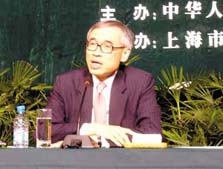
Despite the apparent glamour of studying in Hong Kong, several students who have studied abroad aren't as convinced. They doubt if Hong Kong universities are so good as they claim to be. "Chinese students, I mean the students under China's education system, usually think that everything outside is better. But actually, this isn't so. Every city has its secrets, every system has its problems," Leisa Yip, a Guangdong student who studies at the University of California, Los Angeles, told China.org.cn yesterday. "Studying in Hong Kong is like going aboard, both in terms of atmosphere and fees. For me, western countries such as the US and the UK are better. In Hong Kong, mainlanders have to learn Cantonese if they want to stay there for a long time. I don't think that's a smart choice. And from what I know, Hong Kong students aren't much better than on the mainland; some are even worse," she added. Ma Nan, a postgraduate from University of Manchester in the UK, agreed. He said that the best parts of Hong Kong's higher education are the good scholarships, English teaching and international environment. But, he believes that it is the students who make a difference. He said: "The undergraduate courses are just an extension of high school courses. They are nearly the same everywhere. It doesn't make much of a difference whether you study on the mainland, in Hong Kong or elsewhere. Even if they do teach you different things, you may not get it. The good students are the ones who teach themselves well." On July 10, China Youth Daily released results of a poll conducted jointly with Chinese portal site Sina.com. 2,767 people participated in the poll. According to the poll, 71.2 percent of respondents said they would choose the Hong Kong university if they were accepted by both a Hong Kong and mainland university; and 59.5 percent thought that mainland universities' competitive advantages were declining compared to 20 years ago. In another China Youth Daily poll conducted on July 24, 61 percent of the 3,854 voters thought that Hong Kong universities' recruiting ace students from the mainland was fair, while 31.81 percent saw it as a threat to mainland universities. At a press conference in Shanghai on July 13, Professor Lawrence J. Lau, vice chancellor of The Chinese University of Hong Kong, said: "Hong Kong's universities cannot replace China's top universities. We have neither the intention nor power to 'defeat' Beida and Tsinghua. They are still the best universities in China. We have good relationships with them. We also respect the students' choice." "The mainland media are trying to create waves with this," he added, indicating that the phrase "Hong Kong university fever" was coined because of the "freshness" of the concept. "Mainland students know they have an alternative, so they feel it's fresh. No wonder."
He went on to say that many Hong Kong students are willing to study on the mainland. According to Lau, another reason why Hong Kong universities are not a threat to the mainland is "we recruit far fewer students from the mainland. Tsinghua may recruit 4,000 students per year, but we just recruit no more than 500." He added that the quota could increase, but only in the next one or two years. In the meantime, Beida and Tsinghua recently announced that they completed their recruitment drive on July 22. Collectively, they have enrolled 79 of the top science and arts students from the various provinces for this year's intake. (China.org.cn by Zhang Rui, July 27, 2006) |


| Tools: Save | Print | E-mail | Most Read |
 |
| Related Stories |
| Product Directory China Search |
Country Search Hot Buys |
