China's economic development in the past thirty years since 1978, when China began the economic reform and opening up to the outside world, is always referred to as a "riddle" by people all over the world. The answer to the riddle lies in China's reality, as well as world history.
In the winter of 1991, a particular song would be broadcast via loudspeaker at 6:30AM sharp in rural middle schools located in mountainous areas of northwestern Anhui Province. The song, Red Sun, has strong political flavor and praises the late Chinese Chairman Mao Zedong. Many years have passed since the lyric's inception yet the song still sounds very bright, pleasing and pure. Accompanied by the song, students in their teens got up and attended morning classes.
Related reading:
Economists decode China's reforms
An article influences Chinese history
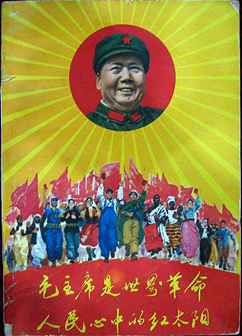
From a historical point of view, many years after 1949, most of the popular songs were those of praise with strong political flavor. They have one common subject – to praise the liberation of the country, newly born national systems, achievements that have been accomplished, and leaders' deeds. The fate of these lyrics was deeply linked to authorities in power. They were popular first because the charm of music. They expressed common societal feelings at that time. China also needed united social feelings; the country promoted and encouraged the popularity of these songs.
After 1978, when China's economic reform and opening up began, innumerable new voices replaced these songs. Many lyrics by the famous Taiwan singer Teresa Teng were sung in Mandarin. Although initially many people criticized her songs as vulgar, profane and even "pornographic" at that time, her sweet voice enchanted many Chinese.
The revival of these old songs was a remarkable event that year according to many observers on contemporary China. The Red Sun song expressed memorial feelings toward Chairman Mao. Observers all agreed that memorial for Chairman Mao indicated that people were discontent with their present situation. They no longer called for in-depth reforms in a radical way.
The missing two years
Talking about China's economic development in the past 30 years, people first remember 1992, not 1978, according to Shanghai-based Xinmin Weekly. This is because from January 18 to February 23, 1992, the late Chinese leader Deng Xiaoping paid visits to several cities – Wuchang, Shenzhen, Zhuhai and Shanghai, all located in eastern and southern China. He also gave a landmark speech on China's reform progress. Deng's speeches played a key role in driving forward the county's economic reforms and social progress during the 1990's.
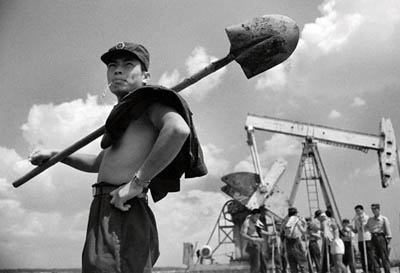
No long before Deng's visits, on December 26, 1991, the Supreme Soviet met and formally dissolved the USSR. Ironically, that day was also the 100th anniversary of Mao Zedong's birth. The collapse of Soviet Union, Mao's anniversary, the popularity of Red Sun, combined together with Deng's inspection of southern China gave people a special feeling that the 1980's had ended. Yet in their minds the 1990's didn't really start from 1990, but from 1992. It appeared that China lost two years: 1990 and 1991, in her history.
Last year the Chinese writer Zha Jianying published a book called Interview with Well-known Persons of the 1980's. The writer said in the preface that: "An American friend of mine once asked me why I spent such a long time compiling and publishing a book about those years. I answered without a moment's thought that the 1980's were romantic times in China, just like 1960's in your country." She said that her American friend was ‘stunned by the comparison'. She said: "The 1960's in the US was undoubtedly a romantic period with special events in US history, featuring idealism, radical self-criticism and learning from the eastern world. Likewise, the cultural mainstream in China during the 1980's also exhibited idealism, radical self-criticism and learning from the western world."
Zha said that the comparison helps foreign readers to quickly understand what she and her interviewees were talking about, although this kind of comparison is actually too simplistic. But she said both she and her interviewees had no intention of romanticizing the history of that period twenty years ago.
In the first ten years since the reform begun in 1978, people felt excited about the changes brought about by the reform. The society underwent great changes; some people may have felt dizzy because the changes were so big, causing them to think the initial years of the 1990's were terribly dull and oppressed. That's why they consider the two years as "lost" in history.
A new starting point
The Third Plenary Session of the Eleventh Central Committee of the Communist Party of China (CPC), held from December 18 to 22, 1978, is undoubtedly of historical significance in China's history. Party history specialists compared this meeting with the Zunyi meeting that changed CPC history, saying the meeting changed China's history. The meeting lasted only five days, but was mentioned millions of times in the following 30 years.
The structure of the CPC's central power underwent a historical change after Mao passed away in September 1976. The CPC held a 36-day central work conference from November 10 to December 15, 1978 to prepare for the Third Plenary Session. 212 senior CPC officials attended the meeting where Deng made a keynote address – "Emancipate the mind, seek truth from facts and unite as one in looking to the future". The following Third Plenary Session of the CPC Central Committee confirmed Deng's leadership and the policy of reform and opening up. Many years later that session was dubbed as the beginning of the "Deng Xiaoping Era". Judging from the scope and depth that he influenced history, the praise is not overstated. Moreover, the title has another point of reference – "Mao Zedong Era" – the period from 1949 to 1976.
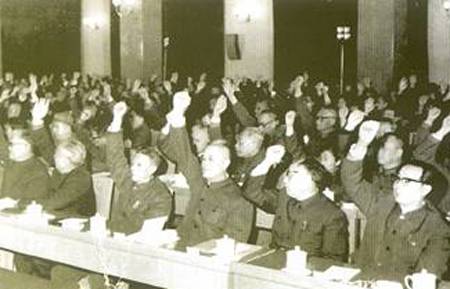
The year 1978 was the new starting point of a new era. It was a milestone year in China's reform and opening up process. It is unique not only because the year has been mentioned millions of times after that meeting, but also because what happened that year set things right in China.
"Set things right," a sentence translated from a Chinese idiom, implied a special meaning at that time: specifically, to correct the ultra-left trend of thought. Currently, young people may not be familiar with this idiom, because they don't know history. But 30 years ago, the idiom was very inspiring for most people. It signified that the economy, as well as social and political life would be pulled back on the rails. Historians always parley this idiom around. They often translate it as "wake up and avoid danger at the last moment," in the sense that the "Cultural Revolution (1966 to 1976)" was wrong.
From October 1976, when the Gang of Four was smashed, to the opening of The Third Plenary Session of the Eleventh CPC Central Committee in December 1978, over 4600 officials, overthrown during the "Cultural Revolution", returned to their former posts. Since then, a storm of energy redressed the vast number of unjust, false and wrong cases that involved millions of people. The dignity and honor of many people was restored. Categorized class divisions were canceled. More people accused of belonging to "contrived" enemy classes were liberated. This storm restored people's political rights; it continued until 1982.
China's development over the past 30 years is based on this liberation storm. The force released from the storm was so strong that it made China's development miracle appear like a riddle.
China Riddle
From 1978 to 2006, China's total economic output increased by 58 folds from 364.5 billion yuan to 21.0871 trillion yuan. The GDP has grown 9.8 percent annually.
People may hold different views about patterns of wealth growth and distribution and the cost associated with growth, but no one will deny the fact that in the past 30 years in China social wealth has greatly increased due to rapid economic growth. The economic growth has altered Chinese reality, affecting Chinese people's life styles and values.
Some may ask: how could this happen? The "China Riddle" in the economy has puzzled many economists for years. Those people trying to solve the riddle always come across the same clue, considered as the successful key to 30 years of reform in China; i.e., withdrawal of government control in economic sectors. The government realized it was neither economically minded nor pragmatic enough to make plans for all enterprises, provide raw materials for them, and control their production and marketing.
In the course of withdrawal, two events had far-reaching effects. Both became major parts of the "China Riddle." The first is that China has turned from a country short of consumer products into a country that has recorded a consumption surplus. The second is that China's economy grows fast, and the total economic output increases quickly. In 2006, China surpassed the UK and came into global fourth place in terms of economic aggregates, following the US, Japan and Germany. Historian Zhu Xueqin said in a speech at the end of 2007 that this was a historical moment that had been neglected. His words made a lot of people recall the 1950's, when the central government re-centralized the lands that had been distributed to farmers to set up peoples' communes and organized them to produce steel. The move was driven by a slogan that elderly people would now say without thinking: "catching up with the UK and surpassing the US." To catch up with the oldest and the strongest capitalist countries at the time, the central government mobilized all possible resources and worked very hard, but things ran counter to their wishes. Ironically, some parts of the goals that seem so unobtainable were inadvertently fulfilled in the last 30 years.
The 1980's reforms are always described as "devolution of power," yet the decentralization of administrative power from economic sectors is a no easy thing; rather, it is a competition between different forces.
The "China riddle" may die on the vine many a time and became a sad story. There were many factors that hindered the devolution of power, but the greatest obstacle is that authorities in power didn't want to give up benefits that did not belong to them. Thanks to Deng Xiaoping's inspection tour in south China and his keynote speech, economic policies that had been argued about and thought to cause serious social consequences in the 1980's were implemented quickly. Arguments continued over macroeconomic control in the mid-1990's, with the sudden pain of mass unemployment caused by reforms of state-owned enterprises, and losses of state assets, but the scope and depth of the economic reform was unparalleled compared with reforms in the 1980's.
Administrative power returns
"Some people always say that reform and opening up is a peculiar policy of China, but this is not true," said Zhang Letian, researcher and writer of the book Farewell to Idealism: Study on the System of People's Commune. He said any normal, highly motivated country would emphasize reform and opening up, not just China. From his point of view, China's reform is different from reforms in other countries because China has accumulated totally different heritages from her history, two of which had great impacts on the country's economic development over the past 30 years. One is China's land system. The other is the system of highly centralized administrative power that pervades virtually every aspect of the Chinese people's lives.
After 1992, if one took a train from Shanghai to Nanjing, both in east China, few patches of paddy fields would be visible but hundreds of unfinished construction sites along the two sides of this busy railway line would be seen. This area is, in fact, a place renowned for prosperity throughout Chinese history. Warehouses and factories have been built in former paddy fields, including many manufacturing bases where businessmen from the US, Europe, Japan and Taiwan Province have invested. The city is continuing to expand along the border of these bases. This "endless construction site" between Shanghai and Nanjing represents an apt microcosm of east China.
Industrialization and urbanization have turned farmers who previously relied on farming into production line workers. The process also absorbed a great number of laborers from central and western China. State-owned land policy and land requisition policy provided institutional support for infra-structural construction and the expansion of industries and cities.
In the first two or three years of the 21st century, large State-owned enterprises finished strategic structural reforms, started to make profits and gathered more social wealth. During the first 20 years of the reform, administrative power distanced itself from most economic sectors, but in the last 10 years, it made a comeback through trade and investment promotions and large State-owned enterprises. This phenomenon may be the most difficult part of "China Riddle."
Special Zone and Dual-track System
The most charming part of the "China Riddle" lies in some pithy sayings such as "let some people and some regions prosper before others," "It does not matter if it is a white cat or a black cat, as long as it catches mice," "To cross the river, one has to be sure about stones at the bottom," "never argue, just do it." These sayings were all expressions of Deng Xiaoping's political wisdom. These adages embody political policies that guide and foster China's reform in the past 30 years.
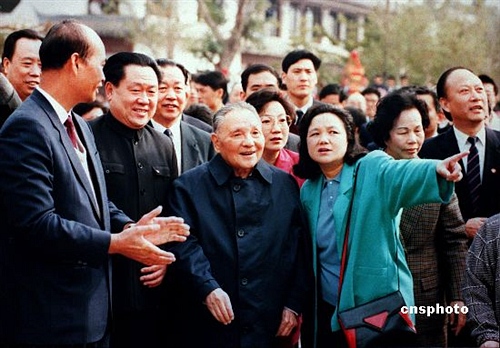
"One central task, two basic points" is a specific expression of these reform policies, which means, while maintaining social stability, the goal is to try to focus on economic development and avoid ideological disputes. Compared with the complicated 1980's, only one concise and single epochal theme existed in the 1990's; i.e., GDP-oriented economic growth. A routine pattern to carry forward the reform existed: a pilot program should be conducted to test a policy before promoting it and turning it into national policy. This pattern is continuation of "special zone" and "dual-track system," – two very popular patterns in the 1980's.
As the crystallization of experience of the 1980's reforms, the two patterns were greatly promoted and used in the 1990's. Actually, they resembled two different names for one single pattern, allowing the existence of two different economic and even political systems inside one country. The former intention is experimental but its real purpose is to compare the two systems and ease any reform shocks that impact upon current systems.
Experimental tax and administrative charges reforms in rural areas, free compulsory education and normal education were set up before these important policies were implemented nationwide.
Special zones and dual-track systems could be implemented as part of a specific policy, such as dual-track price system. Administrative power, rather than the market, could regulate prices of important resources like water, petroleum and gas.
"Special economic zones" and "dual-track systems" became more and more widespread in the last 20 years. In 1993, Pudong became a new area, a special zone. The Pudong New Area promoted the development of Shanghai and even the entire Yangtze River Delta. It is one of the most important fruits of Deng's inspection.
They affect various aspects of the lives of today's Chinese citizens. They also provide a good explanation to the systematic characteristics of the "China Riddle."
(China.org.cn by Zhang Yunxing?February 26, 2008)