Poverty elimination in China: Achievements, experiences and challenges
- By Wan Guanghua
 0 Comment(s)
 Print
Print E-mail China Focus, August 14, 2020



2020 marks the year China will eradicate poverty and achieve a moderately prosperous (xiaokang) society – two major development goals of the Chinese government and Chinese people. Also, China's poverty reduction effort featured most prominently under the Millennium Development Goals (MDGs) of the United Nation.
According to the poverty line of $3.2 per person a day set by the World Bank, 99.7 percent of Chinese were poor in 1978 and this percentage reduced to 4.7 percent in 2018. According to the abject poverty line of $1.9 per person a day also set by the World Bank, 93.1 percent of Chinese were poor in 1978 and this percentage dropped to 1.4 percent in 2018. These data mean that China has already eliminated abject poverty.
MDGs call for halving poverty between 1990 and 2015, during which China contributed 63.9 percent to global poverty reduction. This is why it has been well recognized that if China was excluded from consideration, the world could not have achieved the poverty goal of the MDGs. As a matter of fact, if one shortens the time horizon to 1990-2010, China's contribution to global poverty reduction rises to 74.4 percent. And if we further focus on the first 15 years of the MDG agenda (1990-2005), the contribution of China amounts to a remarkable 93.2 percent. In other words, from 1990 to 2005, all other developing member economies of the United Nations only managed 6.8 percent contributions to the poverty goal of MDGs.
Economic growth is the key
China's achievement in poverty reduction owes a great deal to her fast growth – almost 10 per cent on average annually since 1978 when the policy of opening-up and reform was initiated. In the past few decades, China contributed around 30 percent to the global growth. It is thus fair to say that China's achievement in poverty reduction, like its economic growth, is a miracle too.
How to explain or interpret this poverty elimination miracle? Undoubtedly, economic growth has been playing the most important role. Growth, very much like a rising tide, helps lift people's income which is like boats. According to our analysis, almost all of China's poverty reduction can be attributed to her economic growth. Of course, even if there was no growth, poverty can still be reduced by taking from the rich and giving to the poor. This is called redistribution effect, which comes with distortions and administrative costs. In other words, it is preferable to reduce poverty through growth.
Urbanization and infrastructure construction help a lot
In promoting growth, the Chinese governments at both the central and local levels have rightly emphasized the development of the rural sector by constructing infrastructures of roads, electricity and telecommunications (the so-called three connectivity). These infrastructures help establish links between urban and rural regions, facilitating two-way flows of labor and goods. In particular, these infrastructures have facilitated purchase and application of modern farming including chemical fertilizer, pesticides and agricultural machinery. Meanwhile, they also promoted the sales of agricultural goods in cities as well as rural-to-urban migration.
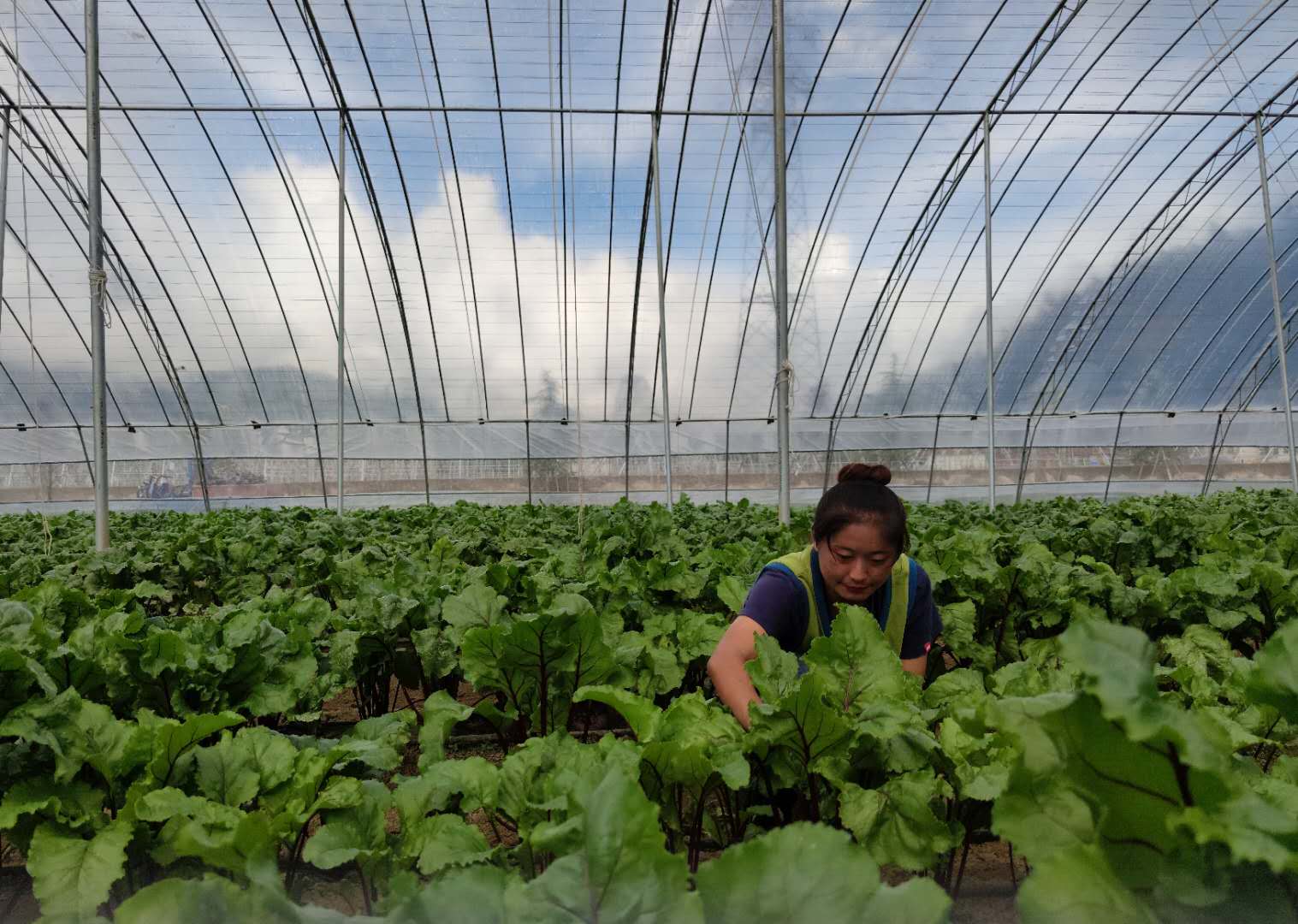
It is worth pointing out the impact of rural-to-urban migration on poverty reduction. As stylized facts, poverty largely exists in rural areas because rural productivity is much lower than in urban areas; and the rural sector grows much slower due to its reliance on land as a non-expanding but essential input while growth in the urban sector largely depends on investment. These facts mean that well-managed urbanization or rural-to-urban migration is a must for developing countries to reduce poverty. Today in China, there are nearly 300 million rural migrants working and living in cities and towns, supporting a much larger rural population through remittances. It is not difficult to contemplate what would happen to China's growth and poverty reduction if such a large labor force stayed in the countryside.
Of course, physical move to cities is insufficient. Rural migrants must be able to find jobs in cities. This is why China's opening-up policy is of great significance. Supported by the policy, many Chinese cities set up special economic zones and used tax concessions to attract foreign direct investments (FDI). FDI comes with not only capital but also advanced technologies, management skills and foreign markets. These are all crucial for industrialization and business development. Needless to say, business development and industrialization create jobs for hundreds of millions of rural migrants.
Institutional support
Apart from urbanization, infrastructure construction and opening-up policy, unique institutional establishment in China shall be noted. China is perhaps the only country that have established special departments in charge of poverty reduction at every level of government. In addition, the poverty alleviation work is led by a vice premier at the central government level and by a deputy governor at the provincial government levels. The leading work group coordinates efforts of different government departments, non-government agencies and enterprises for poverty reduction. For example, for poverty-stricken areas to develop local industries, it requires banks to provide loans, research institutions to provide technical supports, government departments to approve administrative license, land acquisition application and so on.
It must be said that all social actors, such as private enterprises, NGOs, and even individuals, have been mobilized to participate in implementing poverty alleviation and development programs in China. Experts in farming, e-commerce and other areas have been dispatched to poor areas to offer expertise. Since 2013, China has launched the targeted poverty alleviation campaign. The poor families are precisely identified, the alleviations measures are sophisticatedly designed, and the progress are strictly monitored, in order to make sure the efforts can bring actual effect. Also, different regions follow different approaches due to diverse economic, social, natural and geographical conditions. These characterize a poverty reduction model with Chinese characteristics.
Challenges ahead
As a major contributor in implementing MDGs in the past, China now faces significant challenges in reaching Sustainable Development Goals (SDGs) which succeeded MDGs in 2015. SDGs added narrowing income inequality as a major goal. And the main reason underlying the relatively less satisfactory performance in poverty reduction in Brazil, Russia and South Africa lies in their worsening income inequality. Unfortunately, China has seen rising inequality since mid-1980s, with the Gini index increasing from 0.28 at that time to 0.43 in the early 2000s. Although income distribution has been improving recently, China's Gini index remains to be at a high level of 0.41 in 2015. Inequality directly relates to poverty as a same pie means more poverty when divided more unequally. Our research also confirms the detrimental influences of inequality on education, health, crimes and so on, which would undermine investment and growth in China.
In particular, rising income disparity is a major cause leading to weakening domestic consumption as the rich do not increase their spending, while others lack purchasing power. This is a major factor constraining China's growth. Therefore, China must narrow the income disparity in order to boost domestic demand and maintain a reasonable growth rate.
The author is distinguished professor and director of the Institute of World Economy, Fudan University. He was a director and head of Poverty and Inequality Group at the Asian Development Bank.
The article reflects the author's opinions, and not necessarily the views of China Focus.


