Over the past four decades, China has made outstanding achievements in poverty alleviation through its reform and opening up, offering Chinese wisdom and solutions to global poverty reduction.

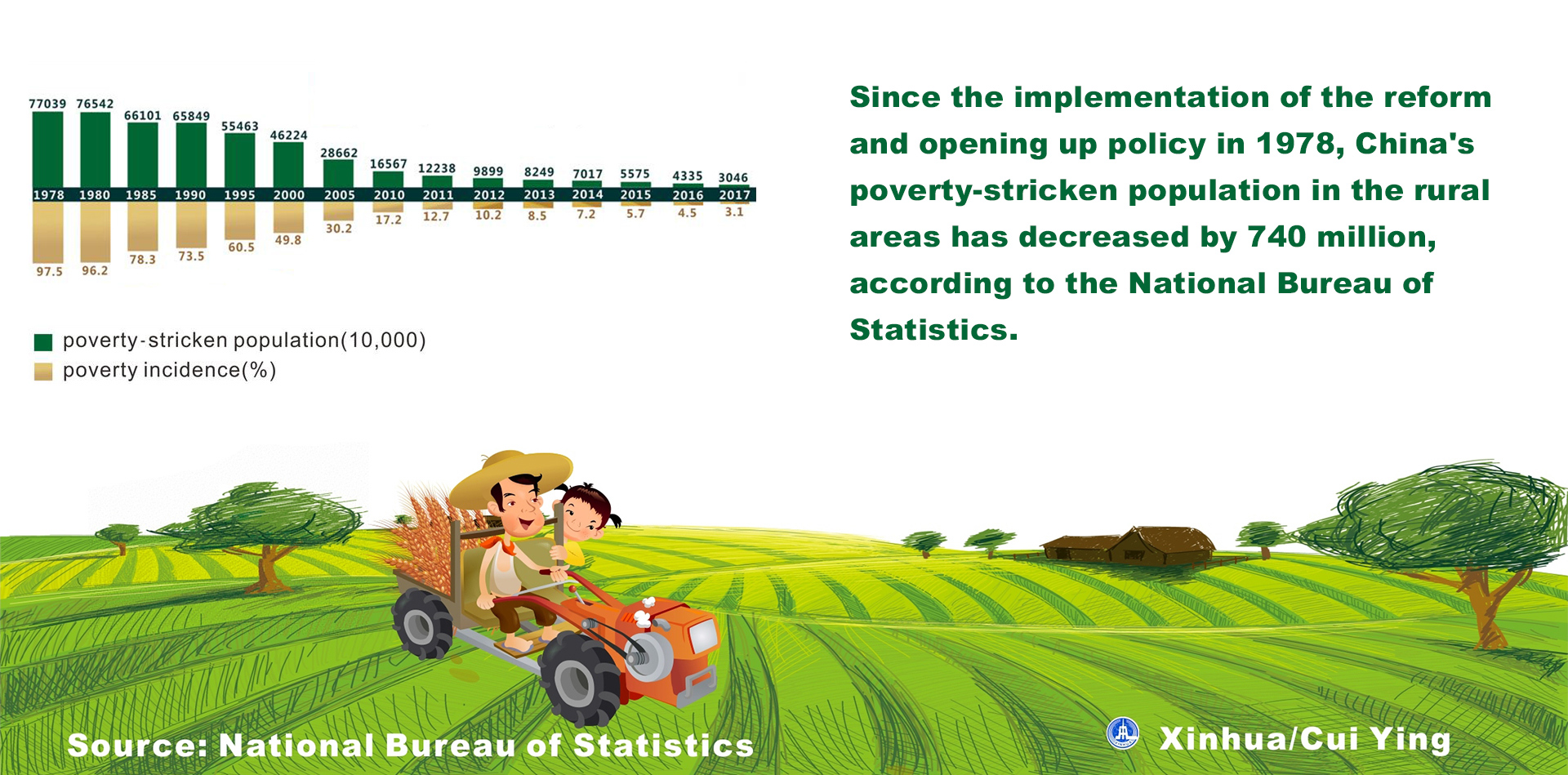
According to the State Council Leading Group Office of Poverty Alleviation and Development, the number of poor people in China dropped from 770 million at the end of 1978 to 30.46 million at the end of 2017. A total of 740 million Chinese people were lifted out of poverty, on average nearly 19 million people a year. The poverty headcount ratio also dropped from 97.5 percent to 3.1 percent, contributing over 70 percent to the global poverty reduction.
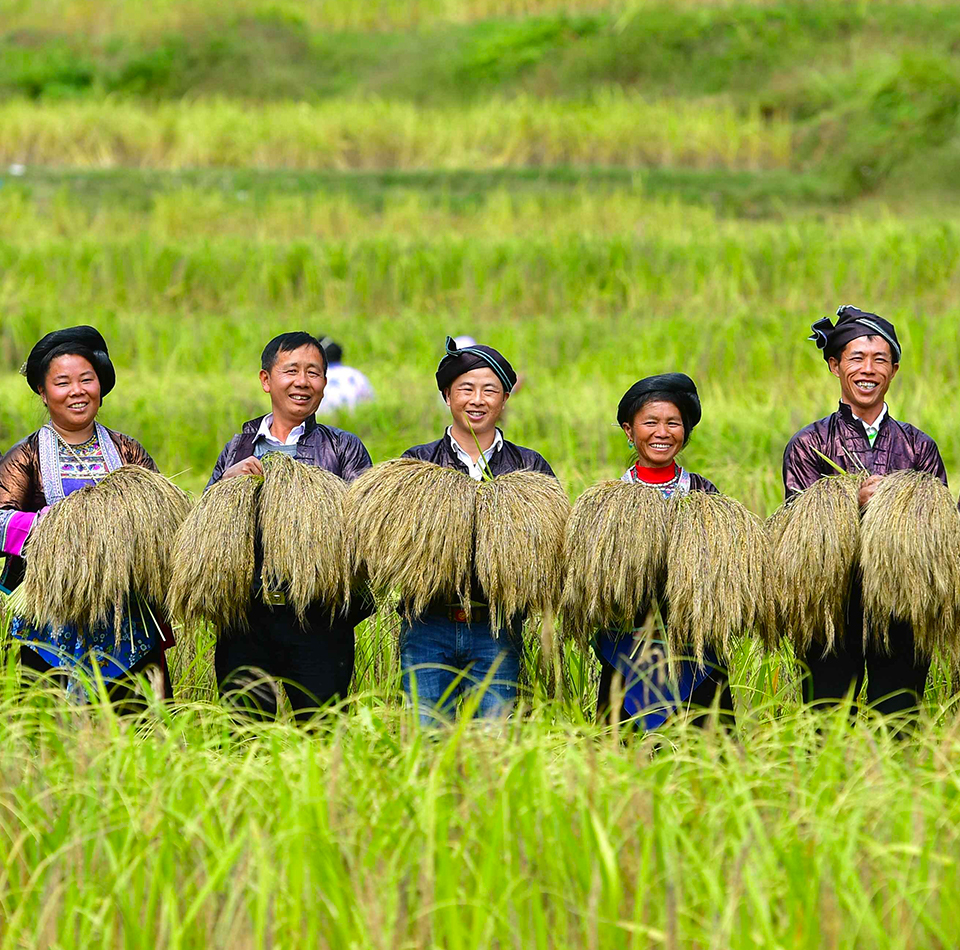
Farmers of the Miao ethnic group show off their harvest of purple glutinous rice in Dali village of Liangzhai township in Rongshui Miao autonomous county, southern China's Guangxi Zhuang autonomous region, Oct. 12, 2018. [Photo/Xinhua]

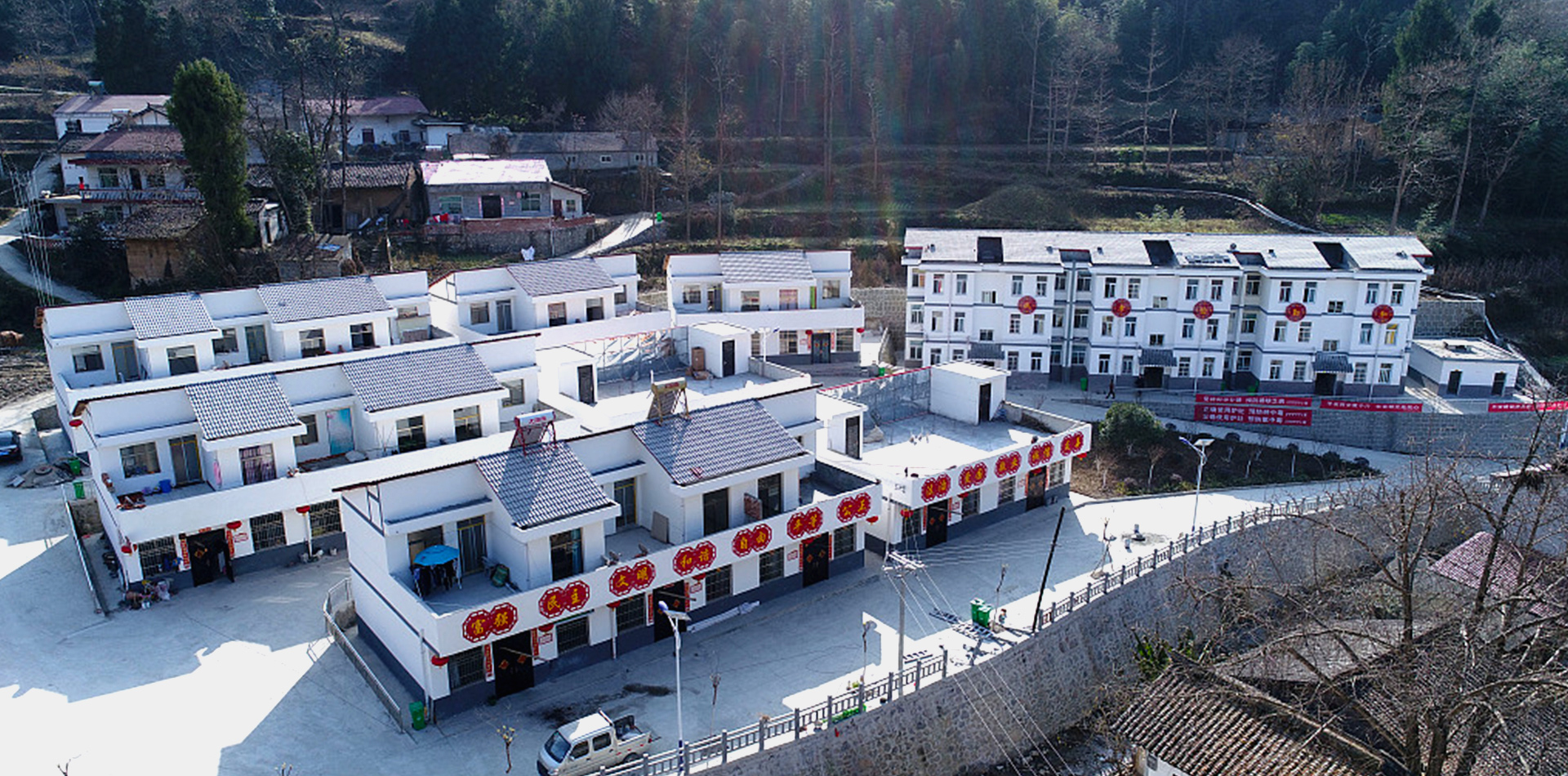
Since reform and opening up, the Chinese government has taken measures like relocating poor people and renovating dilapidated houses in rural areas to secure housing for the poor.
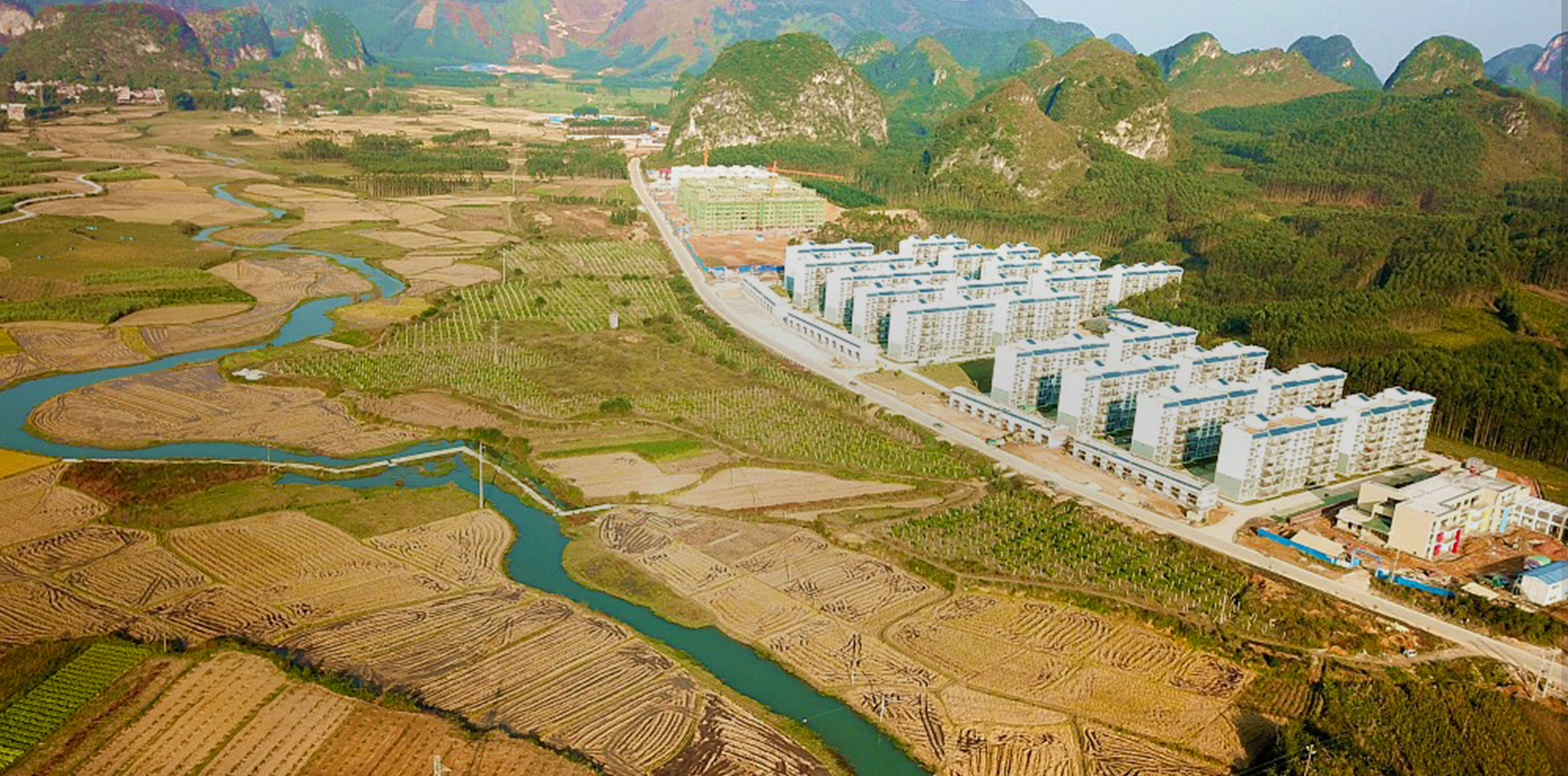
FIRST, RELOCATION OF POOR PEOPLE
Due to drought and water shortage in Xihaigu district of Ningxia Hui autonomous region as well as Hexi and Dingxi areas of Gansu province, the Chinese government initiated a poverty alleviation campaign by relocating villages in 1983. This move helped the local people out of poverty, achieved good economic, social and ecological results, and pioneered the practice of alleviating poverty by relocation. Since then, the relocation of poor people has become an important measure of poverty alleviation in China and has been gradually popularized.
In 2001, China carried out pilot relocation projects to alleviate poverty in Inner Mongolia, Guizhou, Yunnan and Ningxia, and later expanded the scope of the projects to 17 provinces (autonomous regions and municipalities directly under the central government). From 2001 to 2015, the central government subsidized a total of 36.3 billion yuan (about US$5.26 billion) and supported the relocation of over 6.8 million poor people.
According to a plan released in 2016 on relocation to alleviate poverty, nearly 10 million registered poor people will be relocated within five years, in order to address poverty in areas where people can hardly survive in local conditions.
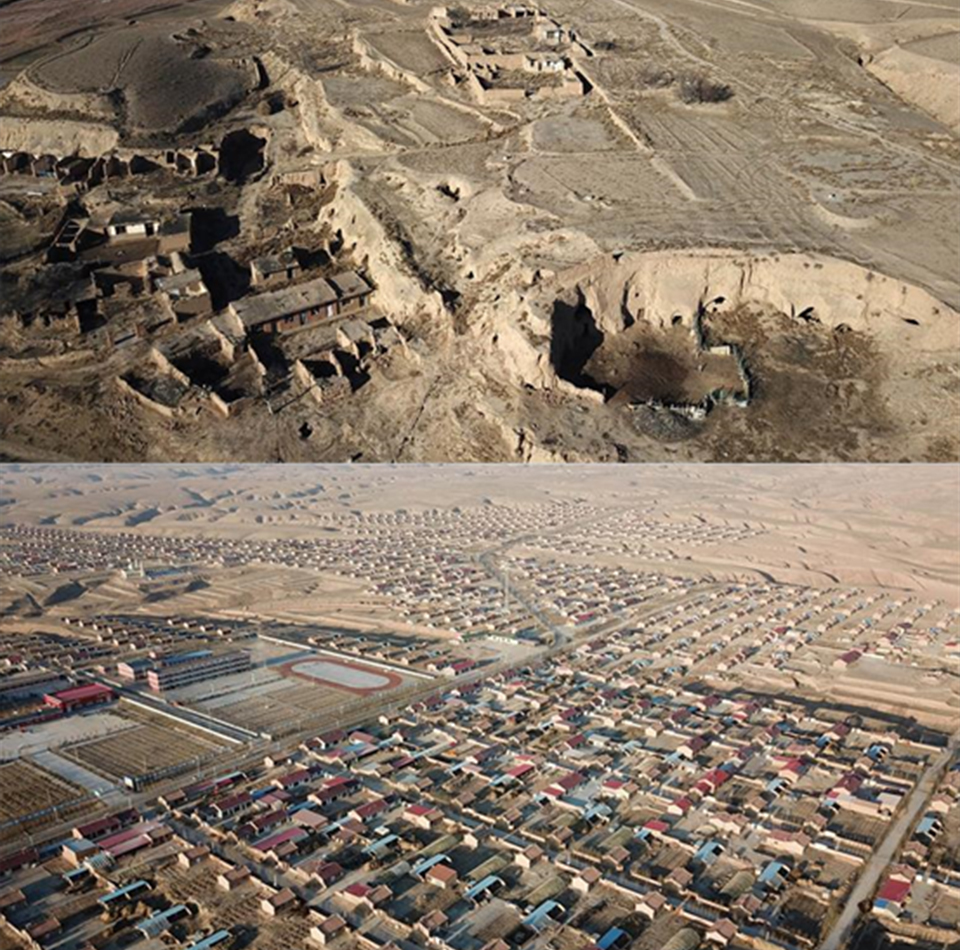
Villagers of Hantianling village of Hexi township, northwest China's Ningxia Hui autonomous region, as pictured above, were resettled to their new homes in the picture below in 2013. [Photo/Xinhua]
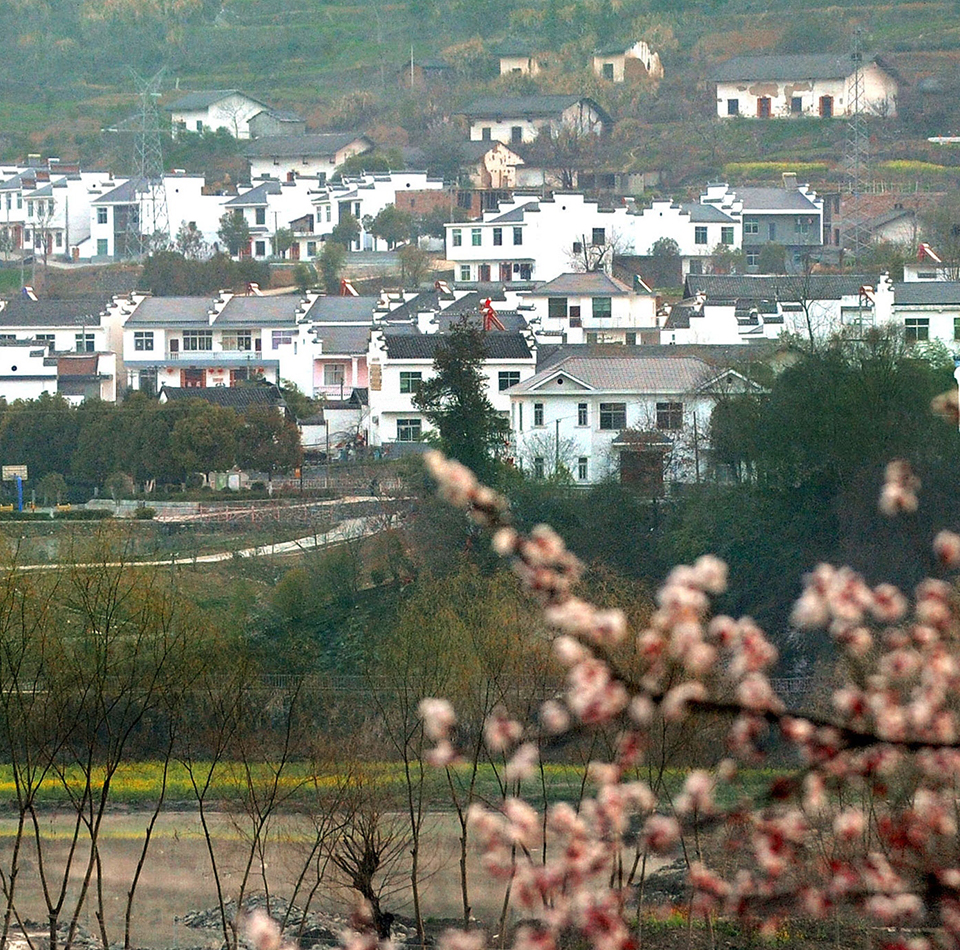
The photo taken on March 14, 2014, shows the resettlement zone of Maobaling village in Pingli county, northwest China's Shaanxi province. Thanks to the village resettlement policy since 2011, over 30,000 people of Pingli county moved out of mountainous areas and settled down in 75 new residential zones. [Photo/Xinhua]
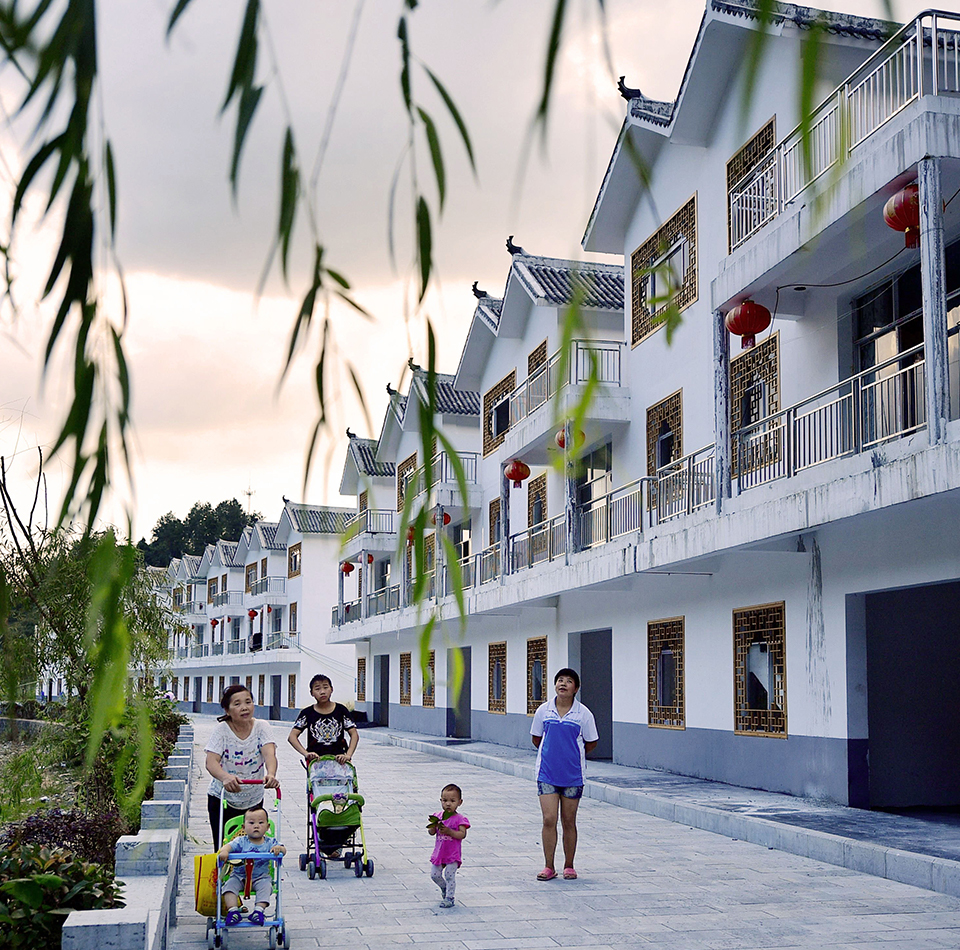
The photo taken on July 17, 2017, shows people on a walkway at a resettlement site for relocated residents from poor areas in Huangjiahe village of Gaoluo township in Xuan'en county, central China's Hubei province. [Photo/Xinhua]
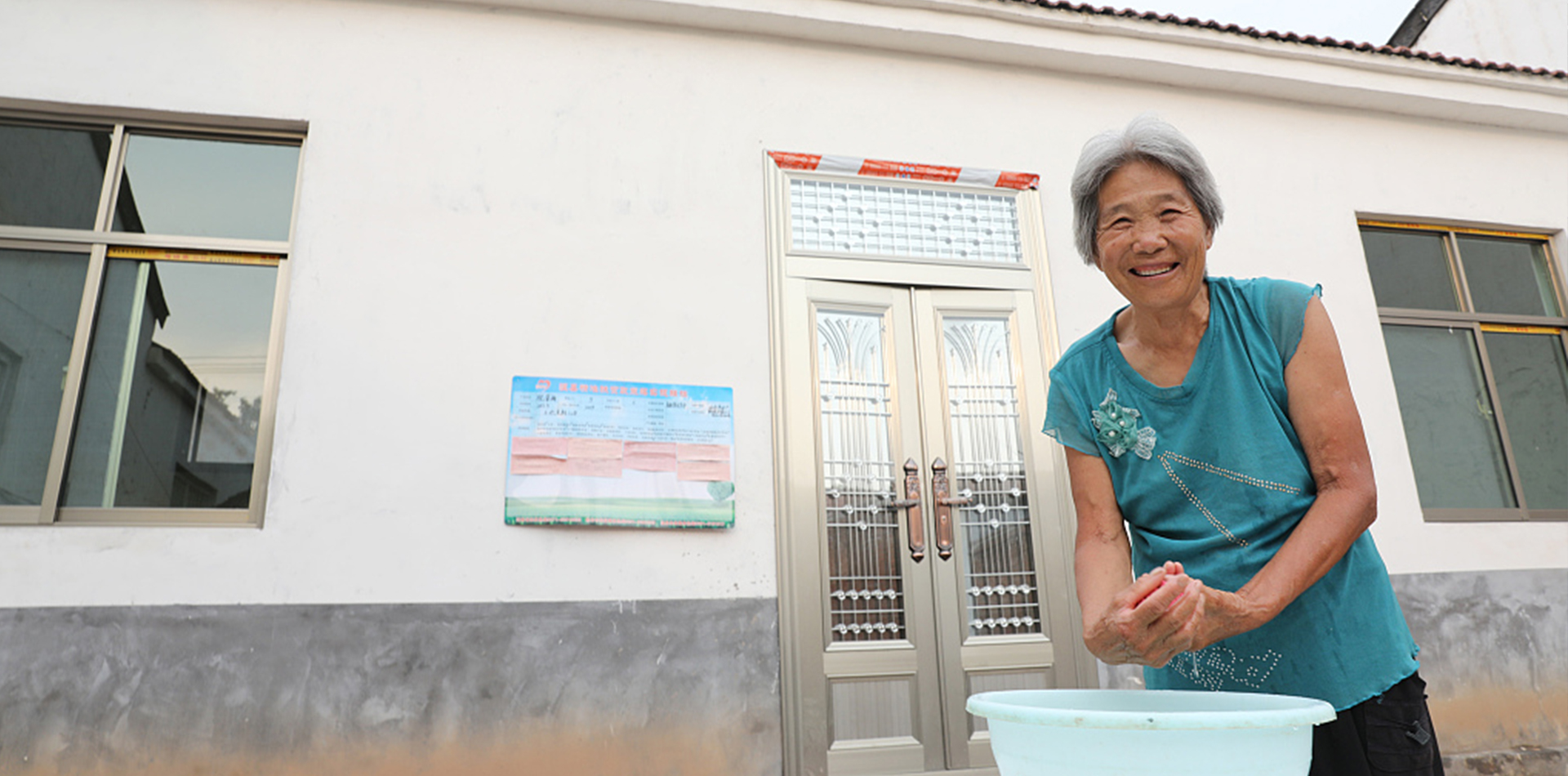
SECOND, RENOVATION OF DILAPIDATED
HOUSES IN RURAL AREAS
China started the renovation project of rural dilapidated houses from 2008 to support the most impoverished rural households. By the end of 2016, 23.11 million rural dilapidated houses were reconstructed nationwide, accounting for 10 percent of the total number of rural households.
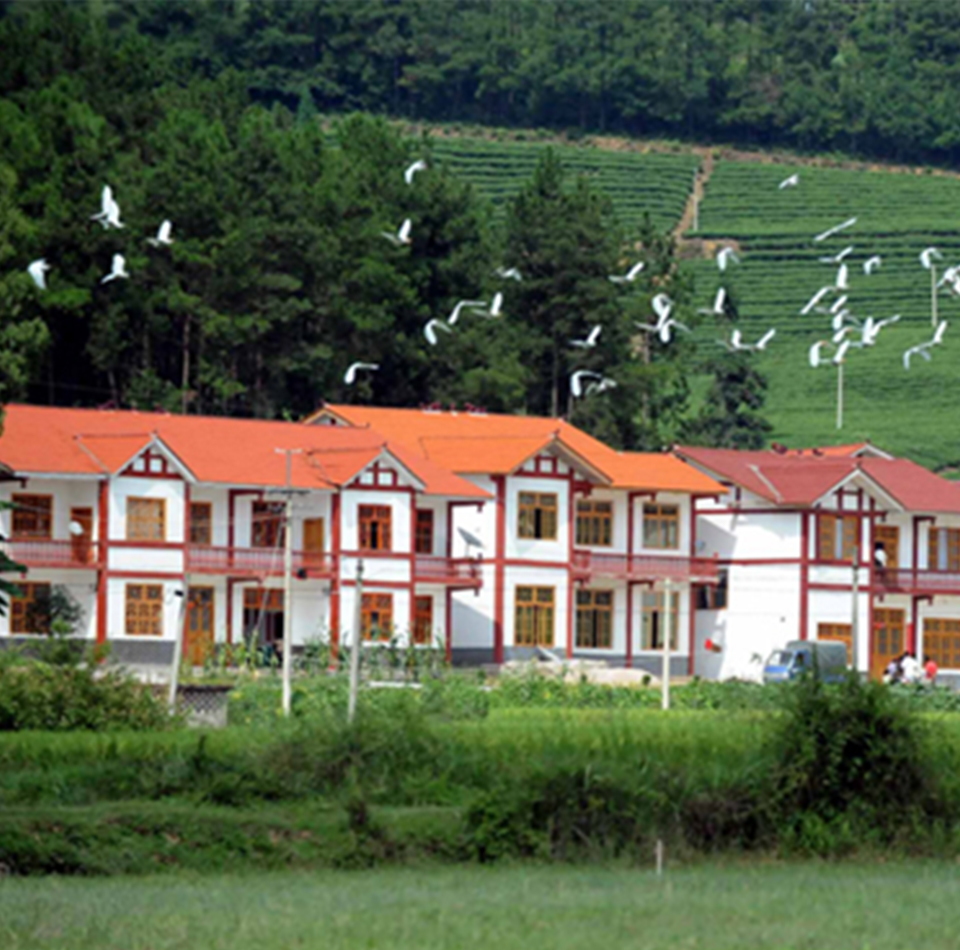
The photo taken on Aug. 18, 2009, shows houses built up through the renovation project in Songyan town, Yuqing county, Zunyi city, southwest China's Guizhou province. [Photo/Xinhua]
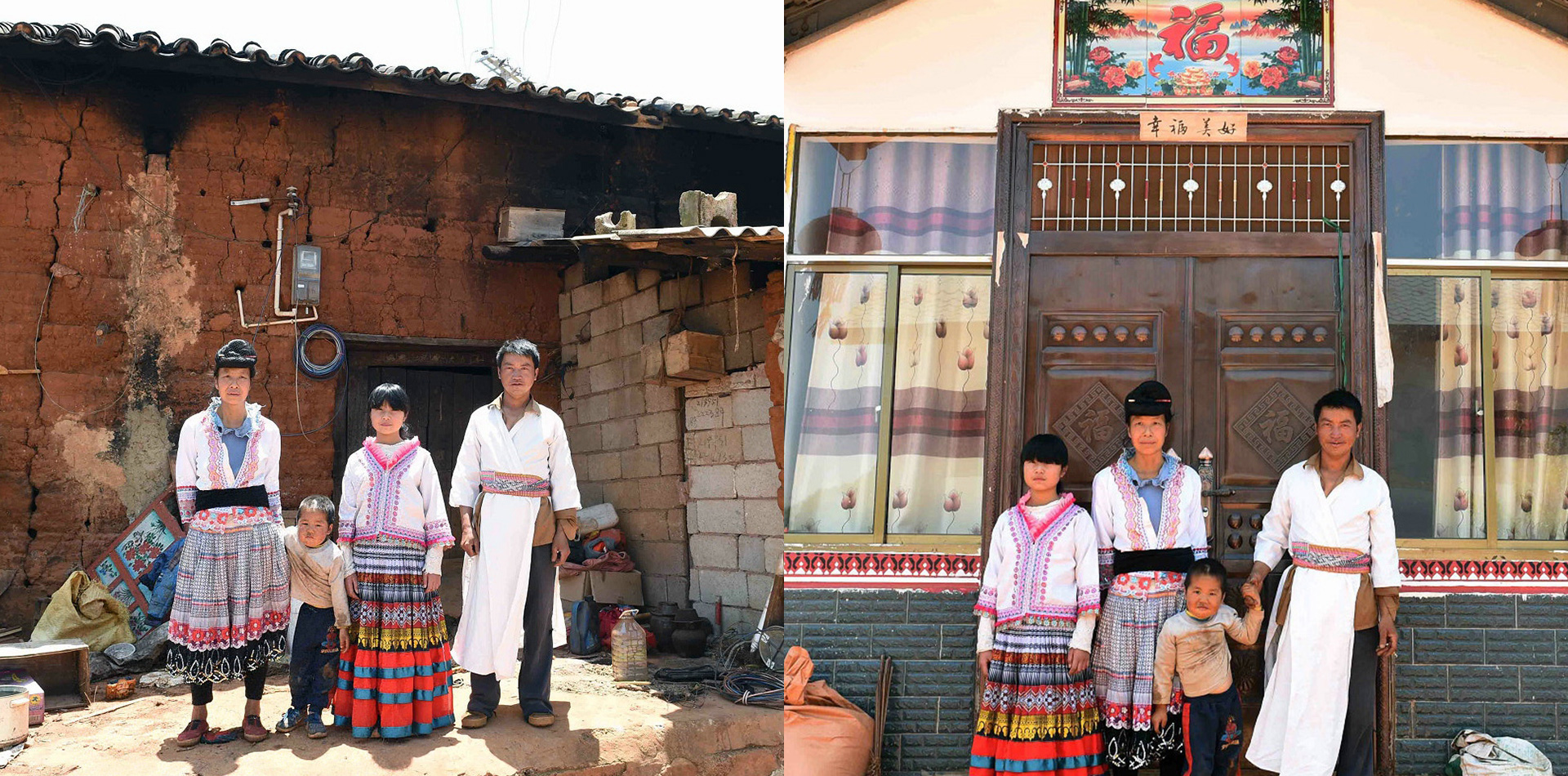
On May 1, 2017, a family stands in front of their new home (pictured right) after being resettled from their old mud-brick house (pictured left) in Chushuiqing village in Luquan Yi and Miao autonomous county, southwest China's Yunnan province. In 2016, Chushuiqing villagers moved from the mud-brick houses they lived in for years into newly built houses with the help of the local government. [Photo/Xinhua]
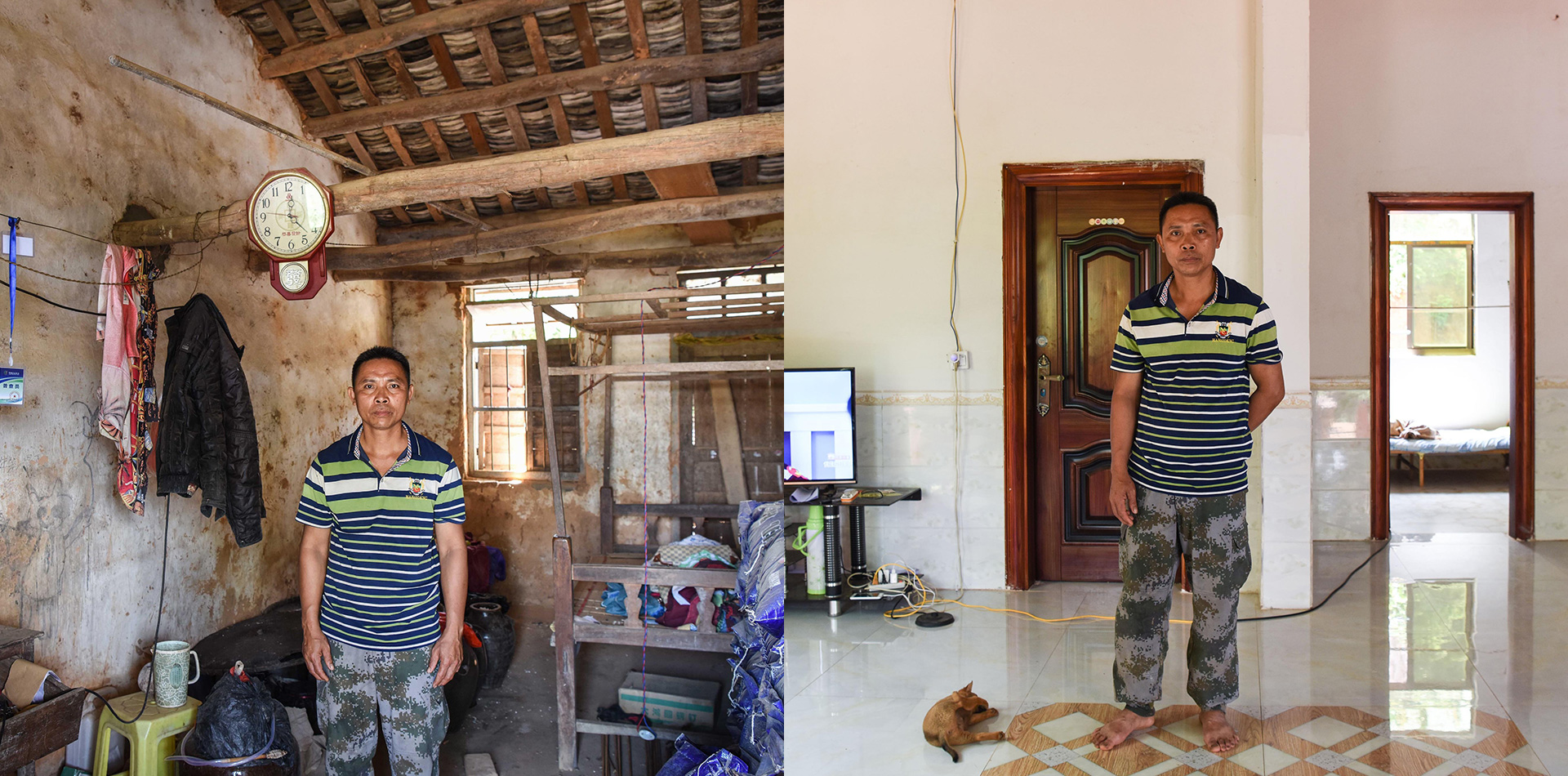
Luo Man, 50, takes a picture in his new living room (pictured right) on May 6, 2017, after being resettled from his old home (pictured left) in Fanyang village of Wuzhishan city, south China's Hainan province. Luo's five-member family, which was on the village's list of impoverished families, got government subsidies of over 45,000 yuan to build their new house. [Photo/Xinhua]


Since reform and opening up, to ensure poor people's access to education, the Chinese government has taken measures to promote balanced compulsory education, bridge the education gap between urban and rural areas, improve education infrastructure in impoverished areas and allot living subsidies to the students.
According to data released by the National Bureau of Statistics, by 2017, the proportion of rural families in which all members above 16 years old didn't complete junior middle school was 15.2 percent; around 84.7 percent and 88 percent of rural families had easy access to kindergartens and primary schools respectively in their villages; around 89.2 percent of the villages had cultural community centers.
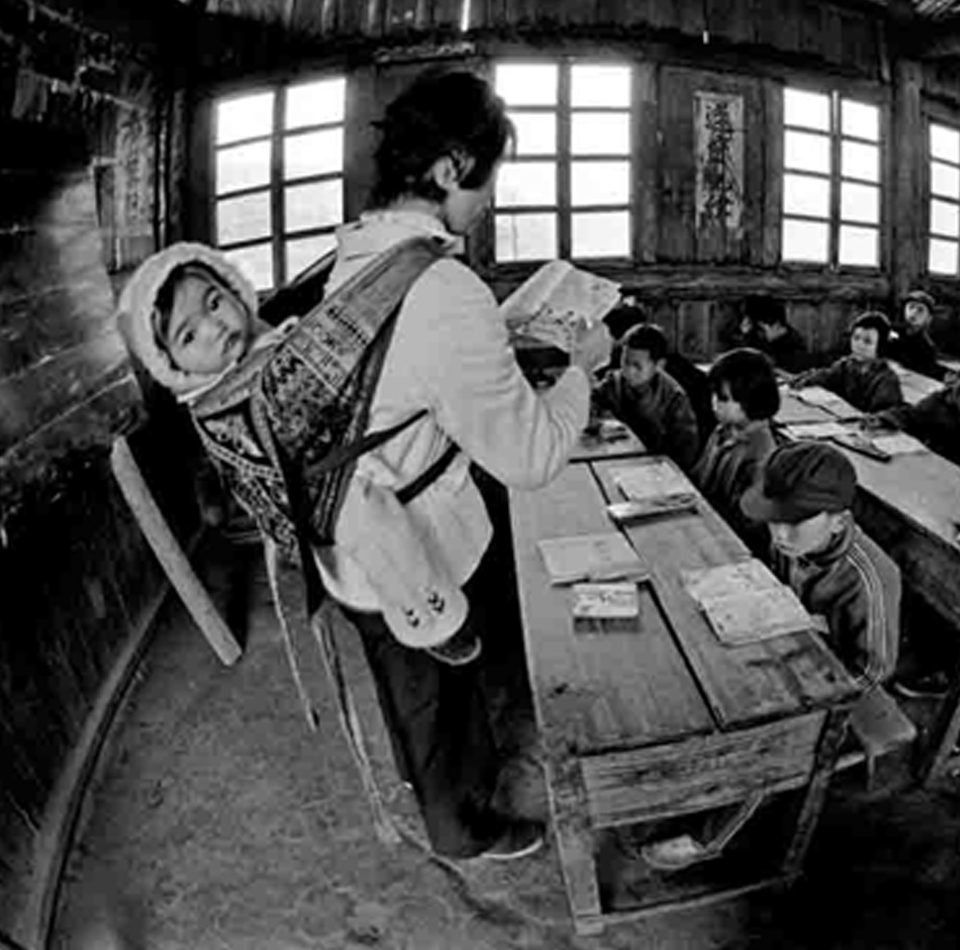
Dai Hongying, a teacher at a primary school in Zhaihuai village, Antai town, Rongshui county in Guangxi Zhuang autonomous region, reads to students while carrying her 4-month-old baby on her back in April 1987. [Photo/China.org.cn]
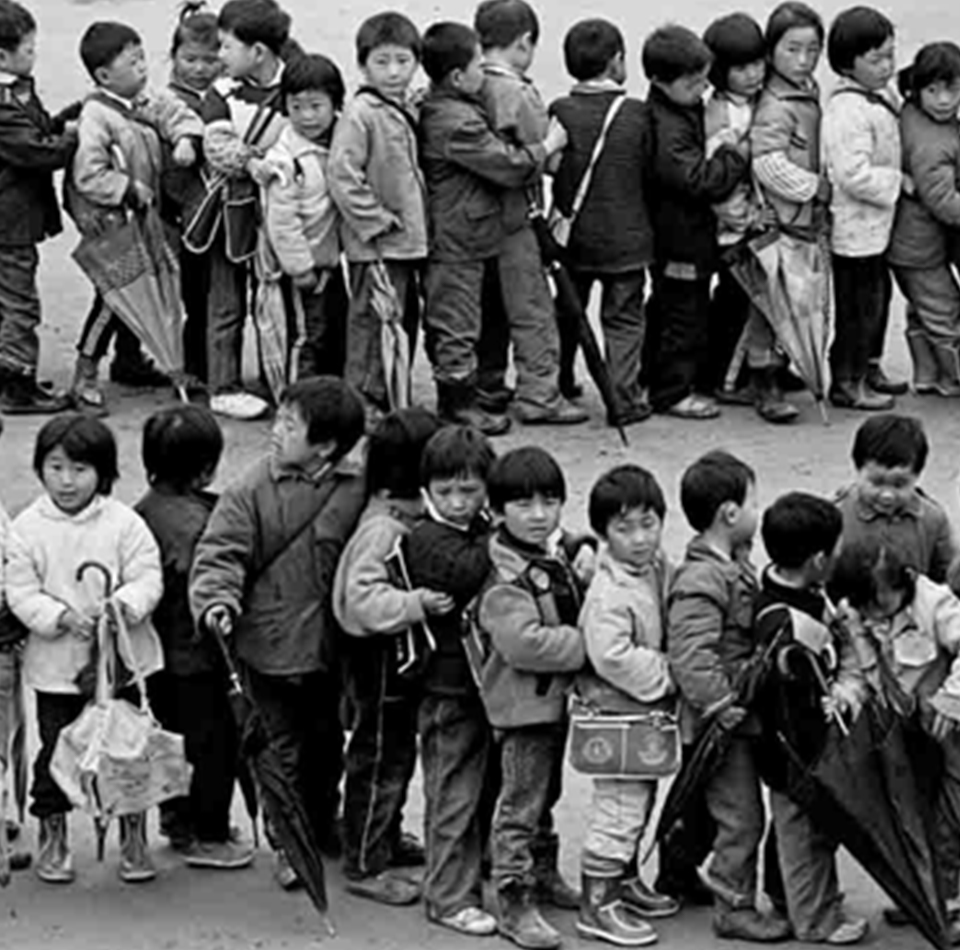
China's first Hope Primary School opens in Nanxi town in Jinzhai county, an old revolutionary base in Anhui province, in April 1991. [Photo/China.org.cn]
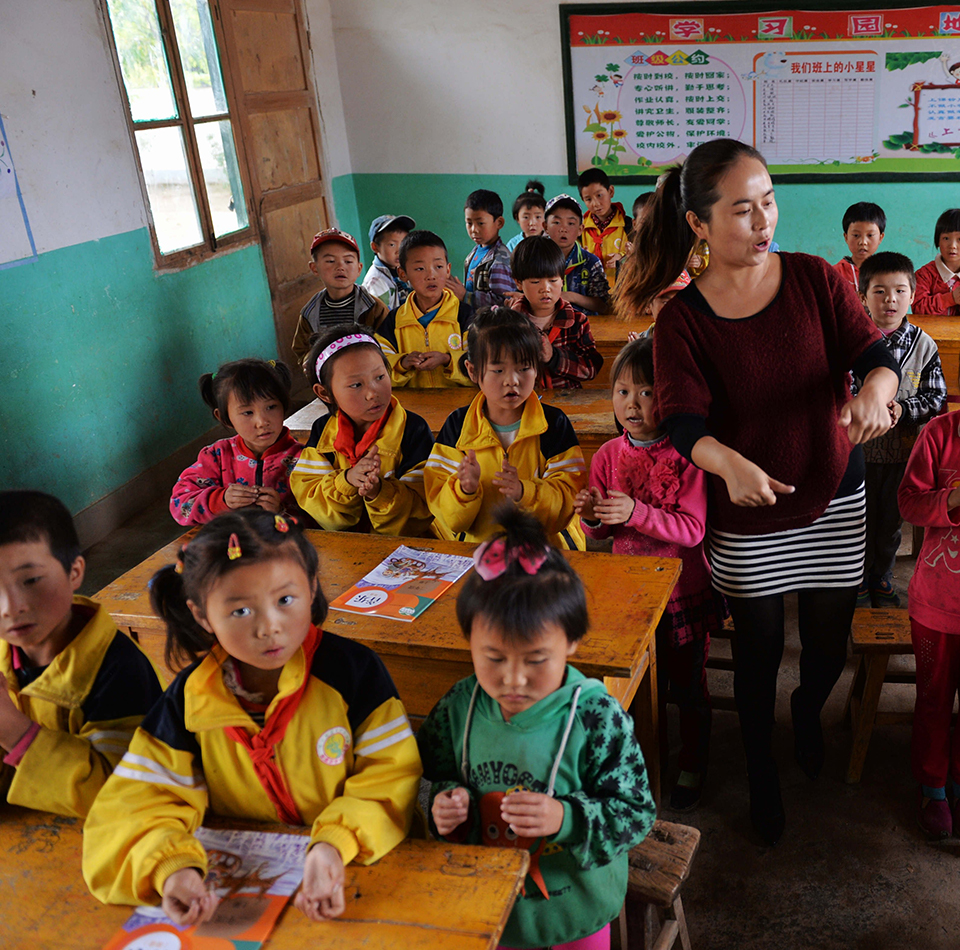
Yang Mingxia, a teacher from a better school district, teaches music at a remote primary school in Longcheng town of Gansu's Tianshui city on Sept. 18, 2015. [Photo/Xinhua]
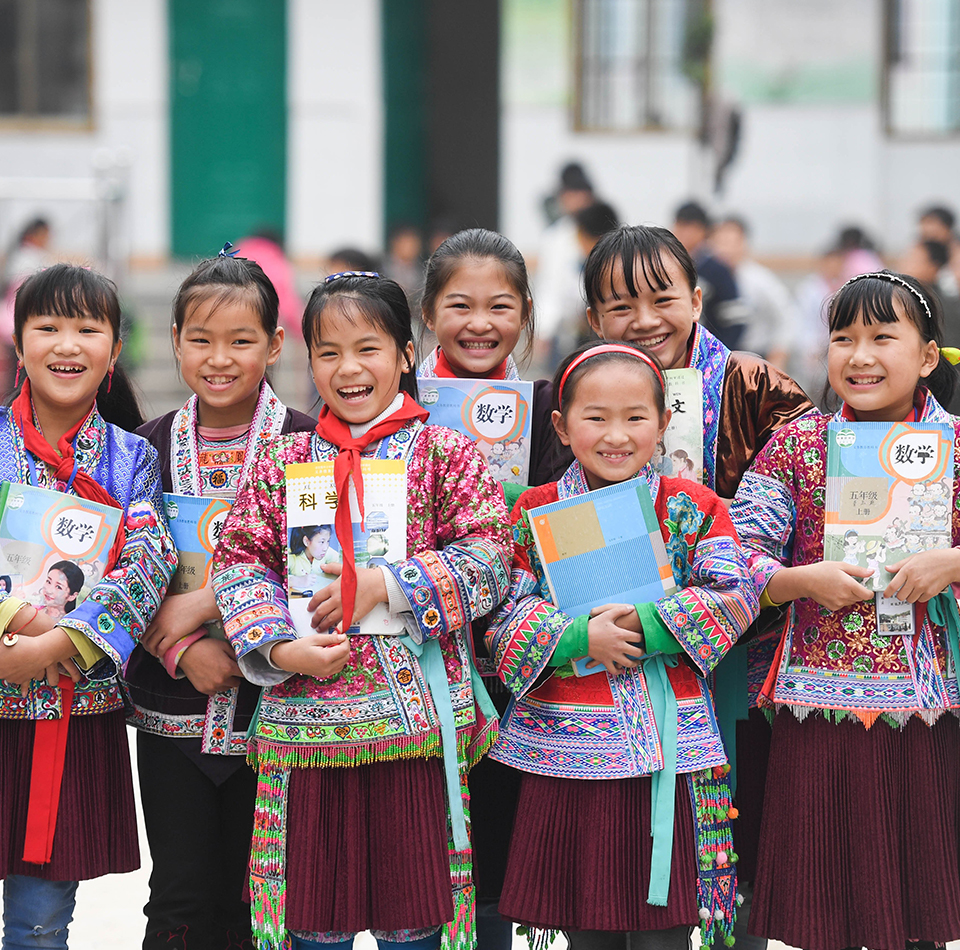
On Nov. 29, 2017, a group of female students pose for a photo at a school in Baiyun township in Rongshui Miao autonomous county, south China's Guangxi Zhuang autonomous region. The primary school enrollment rate of girls of Red Yao ethnic group was 3.2 percent in 1988. Thanks to the work of poverty alleviation, the number in Rongshui county has leaped to 98.4 percent over 20 years of efforts, since the region began exempting girls in ethnic minority groups from all tuitions and fees and setting up all-girl classes. [Photo/Xinhua]

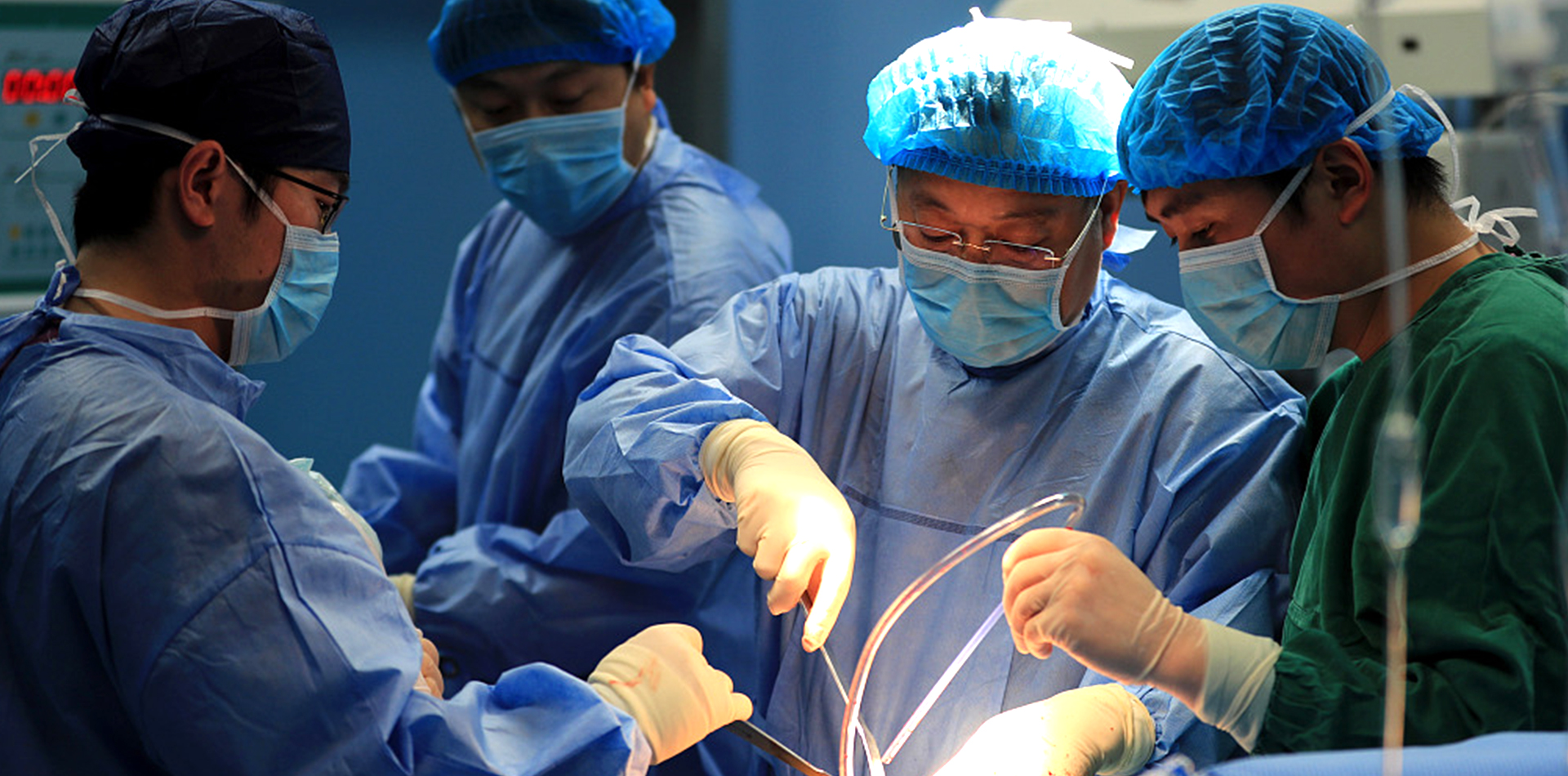
Since reform and opening up, medical services in urban and rural areas have greatly improved. Especially after the introduction of new rural cooperative medical insurance system, along with the improvement of basic health insurance and serious disease insurance schemes, people have easier access to medical services and can receive more government subsidies. The pressure on impoverished residents has been relieved significantly, and government spending on healthcare has increased markedly.
In 2017, the average medical care spending of urban residents was 1,777 yuan after an average annual growth of 16.7 percent since 1979; the medical care spending accounted for 7.3 percent of the total spending of average urban residents, up by 5.9 percentage points compared to 1978.
In 2017, the average medical care spending of rural residents was 1,059 yuan after an average annual growth of 16.7 percent since 1986; the medical care spending accounted for 9.7 percent of the total spending of average rural residents, up by 7.3 percentage points compared to 1985.
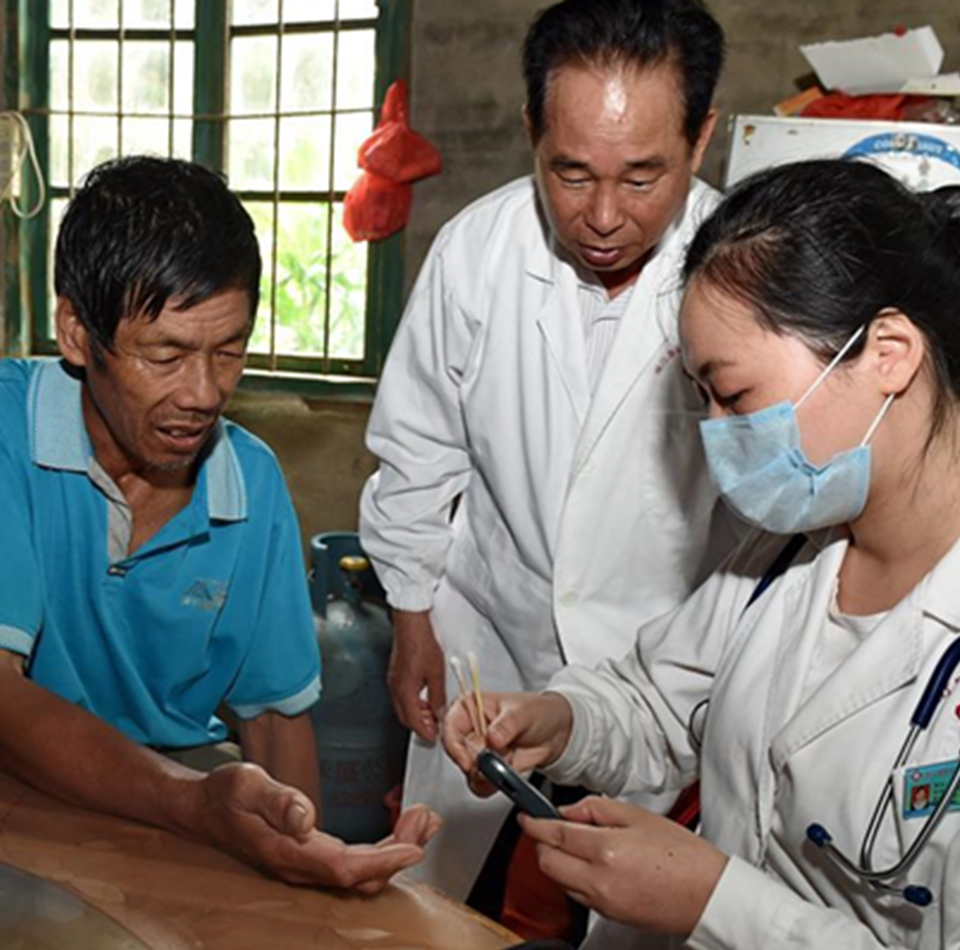
Doctors at a public health center in Guantou town, Lianjiang county of Fujian province, gives a physical examination to an impoverished patient in Longsha village on June 14, 2017. Since 2017, the county has stepped up its effort to relieve poverty by providing medical care services to those in need. Since then, all 742 poverty-stricken families have been paired with doctors helping to take care of their healthcare needs. [Photo/Xinhua]
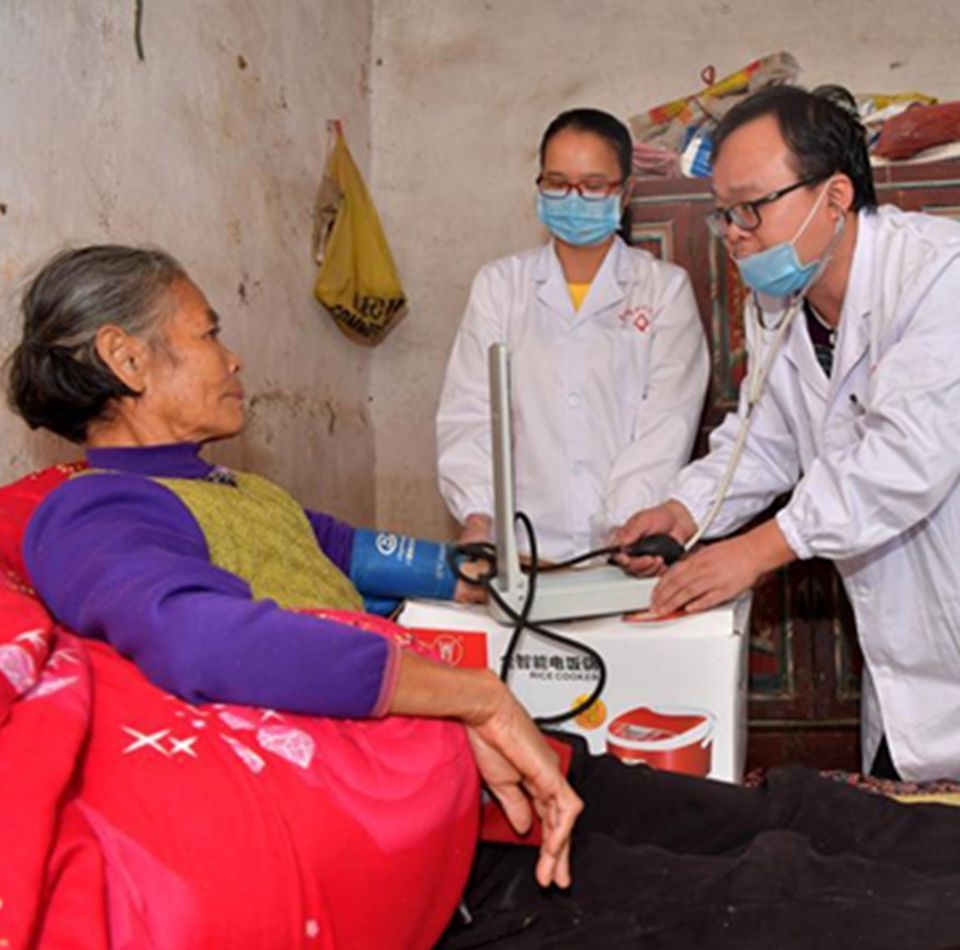
Doctors measure blood pressure for an elderly woman from a poverty-stricken family in Jiangnan village of Litian township in Yongxin county, east China's Jiangxi province, on Oct. 20, 2017. A total of 170 rural doctors and 80 experts and medical scholars have been chosen and trained in the county to provide rural medical services since 2017. [Photo/Xinhua]


Transportation in poverty-stricken areas has markedly improved. In 1978, the total length of rural roads was only 586,000 kilometers, and many towns and villages were not linked by roads. By the end of 2017, the total length of rural roads exceeded 4 million kilometers, and 99.99 percent of towns and 99.97 percent of villages were linked with other areas by roads.
People's access to electricity and telecommunications has greatly improved. At the end of 2017, almost all villages, even the most poverty-stricken areas, had access to electricity, 98.5 percent of the villages could use telephones, 86.5 percent of the villages could use cable televisions, and 71 percent of the villages had access to broadband network. The livelihood of people in poverty-stricken areas have improved markedly.
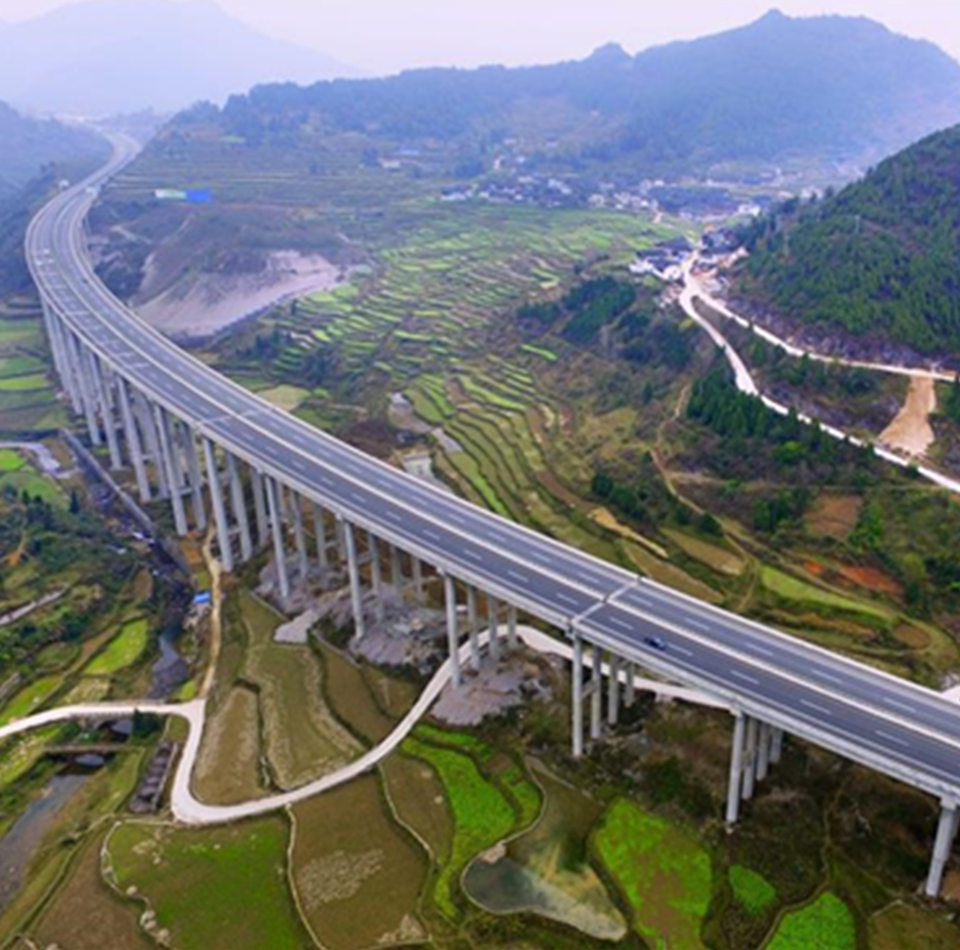
The photo taken on Dec. 19, 2015, shows the Yangjia Bridge in Danzhai county of Guizhou province. By the end of 2015, the total length of highways in Guizhou was 5,128 kilometers, linking 88 cities and counties in the province. Guizhou also became the first province in western China to have highway connections in all cities and counties. [Photo/Xinhua]
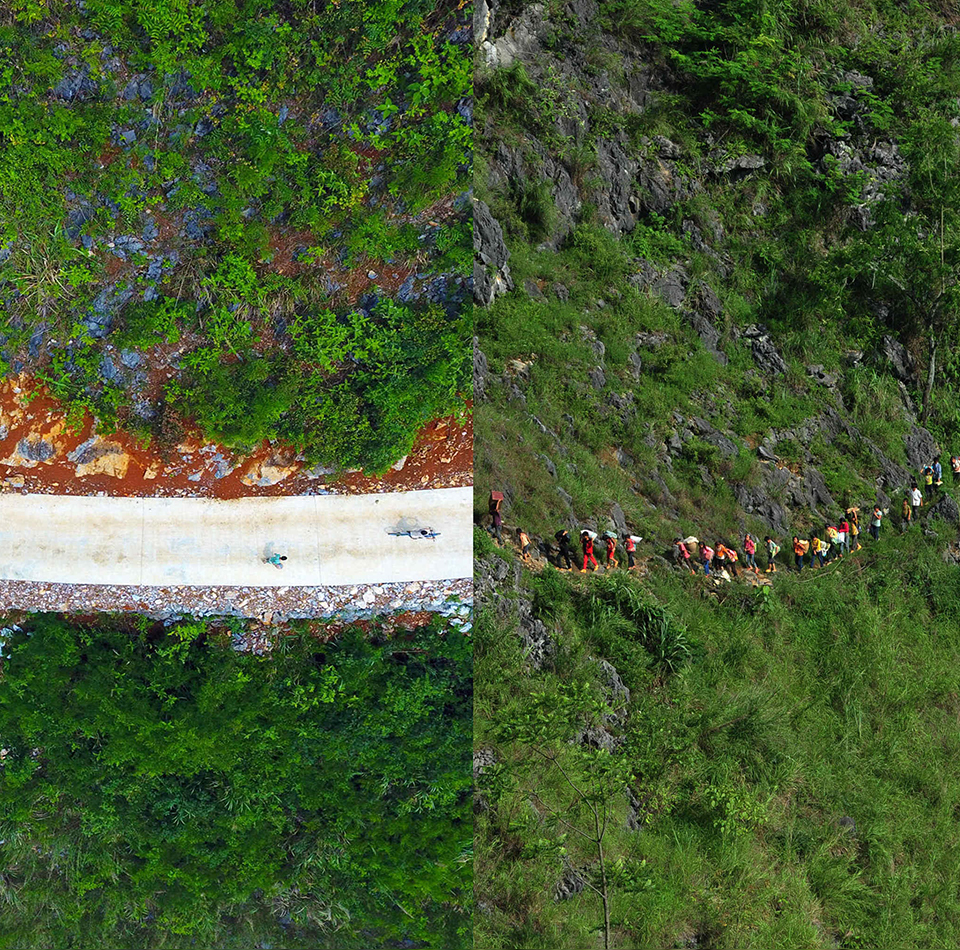
The photo taken on May 7, 2017 (left) shows a newly constructed road along the mountain, laid over a narrow mountain path where children climbed to and from school (right, taken on July 4, 2012). The road is located in Nongyong village of Dahua county, south China's Guangxi Zhuang autonomous region. [Photo/Xinhua]
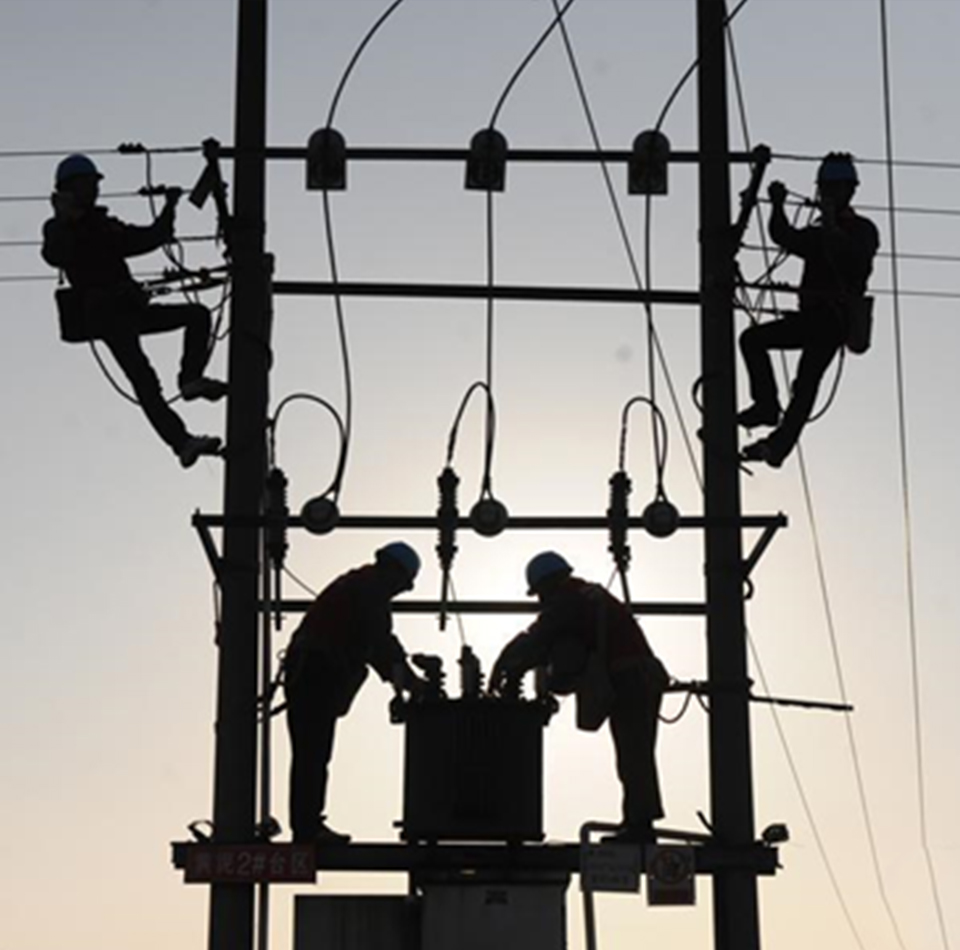
Electricians work on grid upgrades in Huangni village in Chuzhou city of Anhui province on March 17, 2014. [Photo/cnr.cn]