Soil pollution poisons more than farmland
 0
0 


Soil pollution is spreading, and how to tackle it has been given priority status at the ongoing annual sessions of the National People's Congress and the Chinese People's Political Consultative Conference (CPPCC).
|
|
|
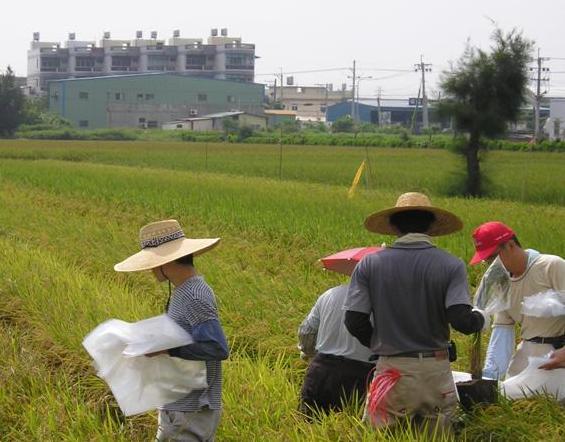
The threat of soil pollution to food safety [File photo] |
Environmental campaigns during the past five years primarily targeted air and water pollution, but now more attention is being given to the risks posed by contaminated soil.
Jia Kang, a CPPCC National Committee member, called for the legislators to start the drafting process for a soil protection law immediately.
Jia, who also heads the institute of fiscal science at the Ministry of Finance, said this week that land pollution already threatens the sustainability of economic growth and social stability.
Health Minister Chen Zhu said comprehensive evaluations of health risks from soil pollution are already under way.
Environmental Minister Zhou Shengxian has vowed repeatedly in recent months to strengthen efforts on curbing soil pollution during the 12th Five-Year Plan period (2011-2015).
China is already suffering direct economic losses caused by farmland pollution, which leads to reduced grain production and public questions over food safety, Jia said. In the long run, he said, land pollution will also take a toll on China's grain exports and threaten the country's ecological security.
But few people have noticed that soil pollution is not just an issue on farms, but also occurs in urban areas.
Affordable, but risky
Last November, an affordable-housing project in Wuhan, the capital of Hubei province, was found to have been built on the site of a previous chemical plant, according to news reports.
The compound, with 2,400 apartments, was constructed to meet the demand of middle- and low-income earners. Those who were qualified to purchase the property were considered lucky.
However, few of them knew their homes were constructed right where Wuhan Yangtze Chemical Plant once operated, the Beijing News reported. The project's developer didn't evaluate the site's health risks, the newspaper said.
It was not until construction was almost finished that an environmental review by China University of Geoscience discovered that the site was contaminated with antimony, a metallic element that can cause heart and lung problems, as well as with organic pollutants.
As a remedy, plastic sheeting was spread over 21,000 square meters to insulate the contaminated soil, and new soil was spread on top of the plastic. The measures cost the developer 6.8 million yuan ($1.03 million), according to the newspaper.
Local government officials said the compound is now safe to live in, but some residents aren't so sure. There's still 3,200 tons of contaminated soil buried beneath them.
'A growing concern'
Contaminated sites such as this, known as brownfields, are becoming increasingly common in major Chinese cities as urban sprawl has overrun many polluting factories, pushing them to new locations and leaving health risks behind.
In an extreme case, three construction workers were poisoned by toxic gas released from an old pesticide plant site as they drilled for Songjiazhuang metro station in Beijing in 2004.
"Pollution incidents associated with land contamination are becoming a growing concern in China," said Jian Xie, a senior environmental specialist at the World Bank. "Many brownfield sites, if not managed well, will pose an environmental and health hazard in China's most densely populated areas, as well as an obstacle to urban and economic development."
A recent study conducted by the World Bank shows that China's rapid urbanization has resulted in the need to redevelop industrial land once occupied - and contaminated - by old industries that sat on the cities' perimeters decades ago.
For instance, in Beijing, more than 100 polluting factories inside the Fourth Ring Road were relocated, leaving as much as 8 million square meters of industrial land to be redeveloped. Shanghai, Chongqing, Guangzhou and other big cities are in a similar situation.
Such sites are often heavily contaminated because pollutants leaked into the soil during previous production processes and because hazardous wastes weren't handled properly. In some cases, the concentration of pollutants in the soil can be hundreds of times higher than regulations permitted, according to the World Bank report.
Soil contamination usually involves toxic heavy metals from steel, iron and smelting plants; persistent organic pollutants (POPs) from pesticide residues; organic chemical compounds from petrochemical industries; and electronic wastes.
Heavy metals and POPs seldom break down over time and can accumulate in the environment. They can be absorbed into the body through drinking water and the food chain, causing harm to organs or even cancer.
Luo Yongming, a researcher from the Institute of Soil Science affiliated with the Chinese Academy of Sciences, said soil pollution is usually more difficult to identify than pollution in water and air. However, once the soil is contaminated, it can release toxic substances for decades.
"Redevelopment without proper remediation can be a hidden danger for people working or living on the polluted site," Luo said. For instance, volatile substances such as benzene and formaldehyde can enter the human body through breathing. And sometimes, children accidentally ingest dirt when they play on the ground.
A land pollution census conducted by the Ministry of Environmental Protection from 2007 to 2010 found that the soil quality is degrading in the country's economically well-off regions, such as the Pearl River Delta, Yangtze River Delta and Pan-Bohai Bay area, according to Jia, the CPPCC National Committee member.
Soil is already heavily polluted in some industrial zones and mining areas with heavy metals including cadmium, mercury, lead, chromium and arsenic, and with organic chemical compounds, such as oil hydrocarbons. The environmental risks are high.
Wang Yuqing, the deputy director of the CPPCC's Committee for Population, Resources and Environment, said the full results of the census will be published this year.
Starting from near zero
The country lacks sound regulations and laws as well as technical frameworks to manage and remedy brownfields, the World Bank report says.
The existing laws and regulations, such as the Environmental Protection Law and the Water Pollution Prevention and Control Law, could not effectively tackle land pollution, Jia said.
Moreover, different government departments - the ministries of environmental protection, land and resources, agriculture and others - are involved with the tasks of managing land pollution. Jia said their respective roles and responsibilities are rather vague, which is an obstacle for smooth communication and coordination on the issue.
Environmental officials admitted to China Daily that monitoring of contaminated sites is inadequate. Only a few big cities such as Beijing and Chongqing have thoroughly investigated the scope of the pollution and its environmental risks.
Experts estimate that contaminated industrial sites in the country number 300,000 to 600,000.
Remediation for such sites has become an urgent need as the country's rapid urbanization creates a huge demand for usable land, which in turn requires both funding and technical guidelines from the government.
The country's 12th Five Year Plan aims to raise the urbanization rate from 47.5 percent in 2010 to 51.5 percent by the end of 2015, with an average annual increase of 4 percent.
With more people moving from rural areas into the cities, clean and safe land is essential.
Paying the bill
In China, the most commonly used remediation practice is to remove the polluted soil, which is then deposited into a landfill or burned, and replace it with clean soil.
Developers sometimes shy away from remediation because of the costs. Vanke, China's biggest listed property developer, once spent 100 million yuan to treat 30,000 square meters on the previous site of a pesticide plant and a coating business.
Some developers argue that they should not pay all the costs of remediation because they didn't cause the pollution.
Wang Shuyi, director of the Research Institute of Environmental Law at Wuhan University, said the polluters should pay for the remediation. In cases where it's impossible to identify who's liable - some early factories have long since gone bankrupt, for example - the money might come from public funding.
The World Bank report recommended using economic measures such as loans, dedicated subsidies and environment taxes to support clean-ups of toxic sites. Another possibility, used in many Western countries, is setting up a superfund; stakeholders put in money every year to support remediation.
"We cannot simply leave the contaminated sites unheeded," Wang said.


